Margins by sector
The most profitable business in Bali: what published margins show.
The most profitable business in Bali cannot be named from public data, because almost no sector publishes verified margins. What exists is narrow: restaurant benchmarks of 5–20% net depending on format (Klikit, 2026), hotel performance for 2025 (Horwath HTL), and seller-reported figures on marketplaces. This guide ranks business types by what can be checked: demand, legal access for a foreign owner, lease length, tax and who runs the place. It also says where the data stops.
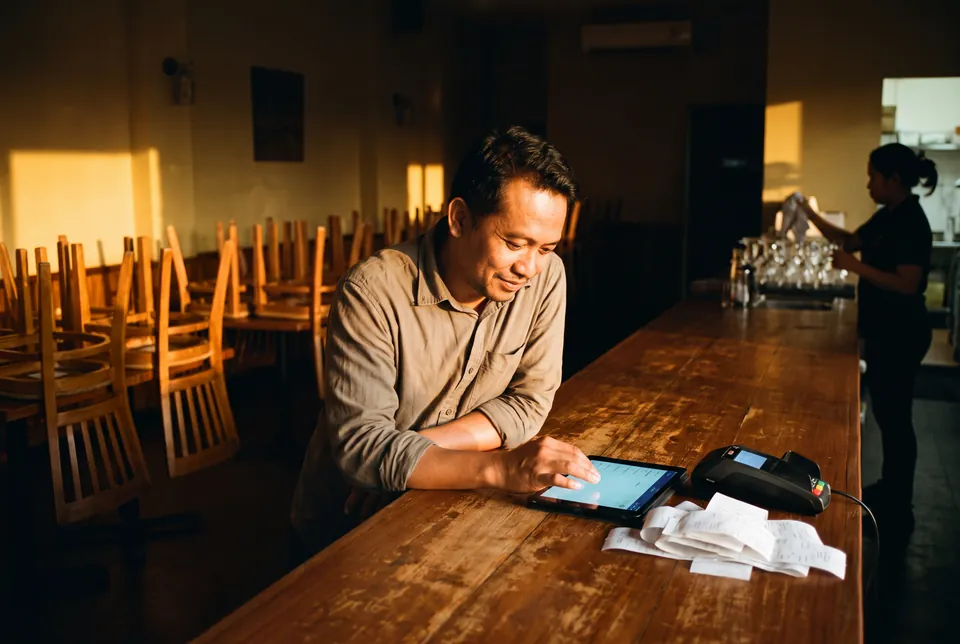
Most profitable business in Bali: the honest answer.
Search for business ideas and you get lists: villa rental, spa, surf school, co-working, café, each with a margin beside it and no source. We looked for the sources in November 2026. For restaurants there are benchmarks, all from interested parties. For hotels there is solid performance data but no margins. For spas, gyms, padel courts, surf schools, co-working and retail we found no published, checkable margin figure for Bali at all, so this page does not quote one.
When a seller, broker or developer gives you a margin for one of those sectors, ask where it comes from. And remember what a margin leaves out: profit is margin multiplied by turnover, for as many years as the lease and the licence let you trade.
Published margins and performance by sector.
| Business | Published figure | Source and its nature |
|---|---|---|
| Casual dining, Indonesia | 5–12% net margin | Klikit, 2026: industry benchmark |
| Fine dining, Indonesia | 10–20% net margin | Klikit, 2026: industry benchmark |
| Quick service, Indonesia | 8–15% net margin | Klikit, 2026: industry benchmark |
| Café under 65 seats; mid-size restaurant of 200–300 m², Bali | About USD 35,000 and USD 55,000 of revenue a month; 12–18% profit | Our Year in Bali: operator view, undated blog |
| Small restaurant, Bali | 15–25% net, payback about two years | DDA Real Estate, October 2025: broker claim, promotional |
| Food-service businesses for sale, Bali | EBITDA 10–40% | Smergers listings: reported by sellers |
| One Uluwatu restaurant for sale | Turnover USD 453,000, profit USD 17,000: under 4% | Searchfunder listing: reported by the seller |
| Hotels, Bali 2025 | Occupancy 74%; average rate IDR 2.35 million (USD 150); revenue per available room IDR 1.73 million | Horwath HTL, March 2026: performance data, not margin |
| Rental villas, Bali | Average villas “struggle to maintain 45–60%” occupancy in shoulder seasons; owners discount 10–30% | Kibarer, 13 February 2026: agency view, method not disclosed |
Sources as named in each row, retrieved 12 November 2026; hotel data from the Bali Hotels Association via Horwath HTL. The restaurant figures come from interested parties. None is an audited Bali study or a forecast for any venue.
Where the demand is: arrivals, source markets and spend.
Demand is the best-documented part of the picture. Bali received 6.95 million foreign visitors in 2025, 10% more than the 6.33 million of 2024 and an all-time record (BPS Bali data in Horwath HTL, March 2026). Australia sent 1.63 million of them, followed by India with 569,261, China with 537,375, South Korea with 346,679 and the United Kingdom with 317,523. Domestic arrivals went the other way, from 10.1 million to 9.6 million in the same report. Hotel demand by area is on our area pages.
BPS Bali puts foreign visitors' spending at roughly IDR 2.11 million a night in 2025, or USD 128, up from IDR 2.05 million in 2024, and ranks the categories: accommodation first, food and drink second, entertainment third (ANTARA, August 2026). Nationally, food and drink took 18.5% of foreign tourists' spending in 2025, out of an average USD 1,267 per visit.
Applying those national averages to Bali's arrivals gives roughly USD 1.6 billion a year spent on food and drink by foreign visitors. That is our own estimate, not a measured figure. On the supply side, the BPS count for 2024 is 64,521 restaurants and eating houses on the island (GoodStats, January 2026). Demand is large; so is the number of people serving it.
What “profitable” hides: lease, licence, staff and tax.
The lease sets the clock
Commercial premises in Bali are often leased for five or ten prepaid years, according to consultancy guides. A generic restaurant-industry yardstick puts a good payback at two to five years and treats anything past seven as risky. Put the two together: a business that needs six years to return its capital on a five-year lease has not made money, whatever its margin.
The licence decides who may start
Since 2026 a new foreign-owned company cannot be registered in Bali for an activity in the two lowest risk tiers, low and medium-low (Emerhub, 18 May 2026). Entry is priced too: capital of IDR 2.5 billion and a commitment to invest over IDR 10 billion (BKPM Regulation 5/2025). A surf school or a small studio rarely needs that much capital, so the rule filters ideas before the market does. Owning a business in Bali has the detail.
Staff
The 2026 minimum wage in Badung, the regency of Canggu, Seminyak and Uluwatu, is IDR 3,791,003 a month. Market pay is higher: a small café pays out IDR 20–30 million in wages each month (USD 1,200–1,800), according to MistSystem's April 2026 cost guide.
Tax
A company pays 22% corporate income tax, and the 0.5% turnover option is reported closed to companies since Government Regulation 20/2026. Restaurants add 10% regional tax to the bill. Bars, nightclubs, karaoke and spas fall into an entertainment band of 40–75% under Law 1/2022, as reported by Pajakku. Whether a venue's bar sales carry the restaurant rate or the entertainment rate depends on how it is licensed, and that single line can erase a margin.
Season
Hotels were fullest in July 2025, at 85.9%, and earned least per room in February and March (Horwath HTL). Any monthly profit figure you are shown should say which months it covers.
Bali business ideas, ranked by what can be verified.
| Business type | Access for a new foreign-owned company | Evidence of demand | Main risk |
|---|---|---|---|
| Full-service restaurant, KBLI 56101 | Open to 100% foreign ownership, medium-high risk tier (Hukumonline, June 2026). Some consultants read the 2026 block more widely, so confirm | Food and drink is the second-largest spending category | Thin margins; zoning of the plot; 64,521 competitors |
| Café, KBLI 56303 | Disputed: some sources class it medium-low risk, which the block would cover | Same category; an operator blog quotes 12–18% | Licence status; main-road rents |
| Bar or beach club | Depends on the code chosen; confirm with a licensing agent | Entertainment is the third spending category | Entertainment tax band; alcohol licensing; coastal zoning |
| Rental villa | The tourism licence it needs cannot be held directly by a foreign individual (Horwath HTL) | Canggu area hotel occupancy 60% in 2025; agency views of 45–60% for average villas | Unlicensed rentals faced removal from booking platforms after 31 March 2026 |
| Property development, KBLI 68111 | Closed to new foreign-owned companies in Bali (Emerhub) | Not relevant | Cannot be registered |
| Small services under low-risk codes | New registrations rejected by the portal (Emerhub) | No published data | Cannot be registered; check the exact code |
Sources: Hukumonline, 25 June 2026; Emerhub, 18 May 2026; Horwath HTL, March 2026; BPS Bali via ANTARA, August 2026; Kibarer, February 2026. Legal status as published; confirm in the licensing portal before you commit.
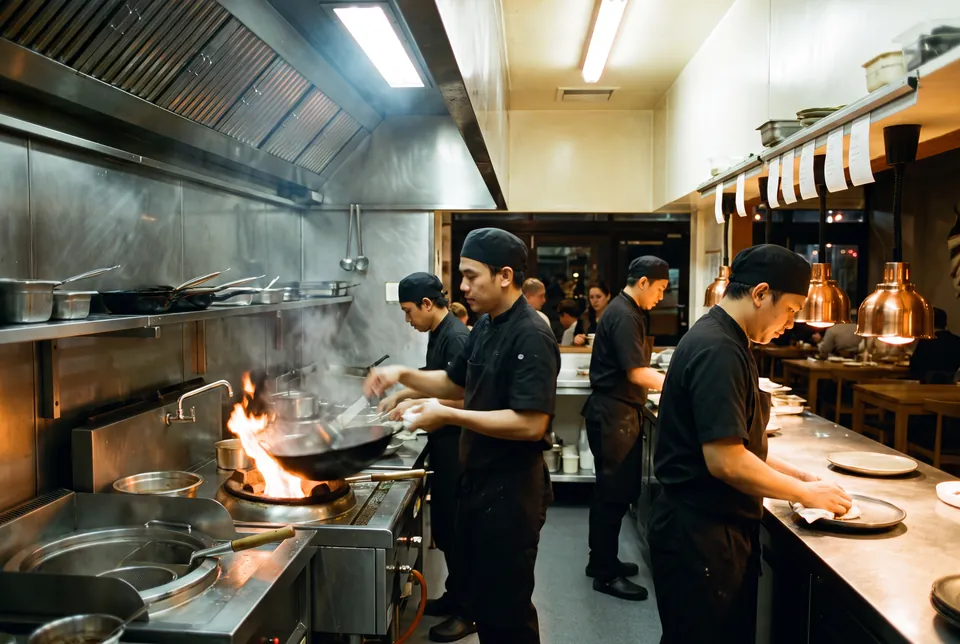
Profitable business in Bali for foreigners: why we work in restaurants, and the limits.
We build and open restaurants, so we are an interested party too. Our reasons can be checked. Food and drink is the second-largest thing visitors spend on. A restaurant under KBLI 56101 can be fully foreign-owned according to Hukumonline. The investment plan for food and drink is counted once per regency, so a second and third venue in Badung do not each need a new IDR 10 billion plan. And when the plot is correctly zoned and the lease is notarised, the land and licence risks can be checked before any money goes into the building.
The limits are just as plain. Benchmarks run from 5% to 20% net, not higher. The productive-land ban names restaurants alongside hotels and villas, and in 2025 the authorities sealed restaurants in the Jatiluwih rice terraces and demolished others at Bingin Beach. A restaurant is an operating business. Nobody can promise what it will earn, and we do not.
What an owner can control is the cost base. That is our part: site and zoning check, design, building approval, construction by the Kimo Construction team, kitchen, and licences with partner notaries, priced from our own site cost data. The ranges on the build cost page and in the calculator are indicative for 2026; a fixed price follows drawings and a bill of quantities. You can open your own venue or take a share in one, where terms are set per project and sent as a project sheet on WhatsApp.
Six tests for any business idea in Bali.
- 01
Find the code
Name the five-digit KBLI (business classification code) and its risk tier, and have a licensing agent confirm that a new foreign-owned company can register it in your regency.
- 02
Price the entry
IDR 2.5 billion of paid-up capital and a plan above IDR 10 billion. If the idea needs a tenth of that, ask a licensing agent whether the foreign-owned route fits it at all.
- 03
Read the lease
Term, prepaid years, extension price, zoning. See how to read a commercial lease.
- 04
Build the worst month
Model February with the low end of the margin benchmark, full payroll and full rent.
- 05
Compare payback with lease years
If the capital is not back well before the lease ends, change the plan or the plot.
- 06
Decide who operates
A business with no named operator has no margin. Run it yourself, hire a manager, or co-own with an operator.
Questions we get on WhatsApp
What is the most profitable business in Bali in 2026?
No audited data names one. Klikit's 2026 benchmarks put casual dining at 5–12% net and fine dining at 10–20%; for most other sectors we found no checkable figures. How to invest in Bali compares asset types.
What is the best business in Bali for a foreigner?
One whose business code is open to a new foreign-owned company and whose capital need fits the IDR 10 billion investment plan. Restaurants under KBLI 56101 meet both tests according to Hukumonline. Starting a business in Bali shows the steps and costs.
Are restaurants in Bali profitable?
Some are. Benchmarks give 5–20% net depending on format, and one Uluwatu listing shows under 4%. The result depends on rent, build cost and operations; see what it costs to open a restaurant.
Is a villa more profitable than a restaurant in Bali?
They carry different risks. A villa's income depends on a tourism licence and occupancy; a restaurant's depends on daily operations. We set out both sides with sources in is it worth buying a villa in Bali.
Which Bali business ideas are closed to foreigners in 2026?
New foreign-owned companies cannot register low-risk and medium-low-risk codes in Bali, and property code KBLI 68111 is closed, according to Emerhub (May 2026). The licence tiers for food and drink are on our licences page.
Read next
Owning a business in Bali
Owning a business in Bali in 2026: what a foreigner can and cannot own, PT PMA capital of IDR 2.5 billion, the OSS block, audits. Questions on WhatsApp.
Hospitality investment
Bali hospitality investment in 2026: hotel occupancy by area, where the tourist dollar goes, F&B margin benchmarks and what you own. Ask us on WhatsApp.

Build cost
Restaurant build cost in Bali, 2026: new build and fit-out per m², kitchen and furniture per seat, an 80-seat example. Your estimate on WhatsApp.