Investor guide 2026
How to invest in Bali in 2026: six asset types in one honest table.
How to invest in Bali as a foreigner comes down to three choices: the asset, the licence route and the person who operates it. In 2026 nearly every lawful route runs through a foreign-owned company (PT PMA) with IDR 2.5 billion of paid-up capital, and one island-wide rule outweighs any brochure: no commercial building on protected rice fields. This guide compares six asset types with sources, then shows where a restaurant share sits among them, risks included.
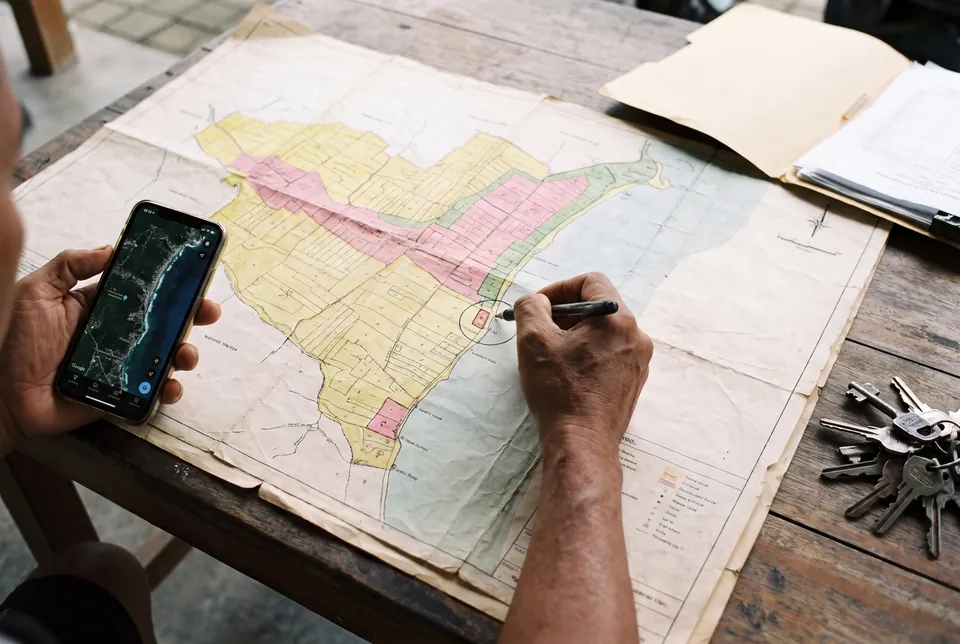
Can foreigners invest in Bali: yes, by lease or through a company.
Yes. A foreign individual cannot own freehold land in Indonesia, so every route rests on one of two rights: a lease (Hak Sewa), typically for 25–30 years, or a right to build (HGB) held by a foreign-owned limited company, the PT PMA, for 30 + 20 + 30 years under Government Regulation 18/2021.
To run a business you need the company, not only the land. Each activity has a classification code (KBLI), and Presidential Regulation 10/2021 lists the codes that are closed or capped for foreigners. Restaurants under KBLI 56101 are not on it, so a PT PMA may own one outright (Hukumonline, 25 June 2026).
The old shortcut, an Indonesian nominee holding land for a foreigner, is the route to drop. Bali's Regional Regulation 4/2026, signed on 24 February 2026, is reported to prohibit nominee land ownership and to carry criminal sanctions (RRI Denpasar). Check any such offer against our list of red flags.
How to invest in Bali by asset type: six routes compared.
| Asset | Typical ticket, published figures | Licence route in 2026 | Who operates | Main risk |
|---|---|---|---|---|
| Rental villa | No public price benchmark. Licensed foreign route: a PT PMA with a plan above IDR 10 billion (Horwath HTL) | Tourism licence held by a company; foreign individuals cannot hold it directly | A villa manager, or you | Licensing: unlicensed rentals faced delisting after 31 March 2026 |
| Land, leased and held | Lease per are (100 m²) per year: about IDR 5–16 million in Ubud, IDR 30–40 million beachside in Seminyak (reported) | Lease in your own name, or a right to build through a PT PMA; real-estate code 68111 is closed to new foreign companies in Bali (Emerhub) | Nobody; land earns nothing while it waits | Zoning, and an extension priced at that day's land value |
| Hotel or condotel unit | Set by each developer; more than 70 managed projects were on sale (Horwath HTL) | A lease on the unit, typically 25–35 years; the operator holds the licences | The hotel operator | Supply: about 40% of those projects are in Canggu and Berawa, where hotel occupancy was 60% in 2025 |
| Restaurant share | Set per project. Whole Bali foodservice businesses are advertised at IDR 2.6–30 billion, self-reported (Smergers) | Shares in a PT PMA under KBLI 56101, medium-high risk tier (Hukumonline) | A restaurant operator | Operations: thin margins and 64,521 competitors (BPS 2024) |
| Beach club | By quote; no published benchmark | Bar code 56301 or a recreation code (reported; confirm with an agent) | A club operator | Coastal zoning, and a possible 40–75% entertainment tax on bar sales (Pajakku) |
| Padel and other leisure | No published figures in our sources | Recreation codes; low and medium-low risk tiers are blocked for new foreign companies (Emerhub) | You, or a venue manager | Permits: a padel venue in Munggu faced a closure demand from a provincial parliament commission (bali.live) |
Sources: Horwath HTL / C9 Hotelworks, March 2026; Emerhub, 18 May 2026; Hukumonline, 25 June 2026; GetWhereNext, 2 April 2026; Bali Home Immo; Smergers listings seen 12 November 2026; GoodStats citing BPS; Pajakku, 6 November 2023; bali.live. Asking prices are self-reported by sellers.
Three 2026 rules that apply to every asset on the list.
1. Company capital
BKPM Regulation 5/2025, issued on 2 October 2025, cut the minimum paid-up capital of a PT PMA to IDR 2.5 billion (about USD 150,000) from IDR 10 billion. The investment plan must still exceed IDR 10 billion (about USD 606,000), land and buildings excluded, counted per five-digit business code per location. Food and beverage is the exception: it is counted per two-digit group per regency, so a restaurant, a bar and a café in Badung can share one plan (Hukumonline).
2. The OSS restriction in Bali
Following a governor's letter of 28 January 2026, the national licensing system (OSS) rejects new PT PMA registrations in Bali for codes in the low and medium-low risk tiers, as reported by Emerhub on 18 May 2026; no regulation number has been published. Background: 19,262 foreign-owned entities registered in Bali in 2021–2025, about 40% of the national total. Large-scale restaurants sit in the medium-high tier (Hukumonline), which should keep them open, but consultants disagree on how far the block reaches into food and beverage, cafés especially. Confirm the exact code with a licensing agent before any deposit. Our licence map follows the dispute.
3. The productive-land ban
Governor's Instruction 5/2025 forbids converting protected rice fields to other uses, tourism property included. After the floods of September 2025 the governor told every regency to stop permits for hotels, villas and restaurants on productive farmland (detik; ANTARA). The rule is blind to the asset: it stops a villa, a padel court and a restaurant alike.
One tax change: the 0.5% final tax on turnover is reported closed to limited companies since Government Regulation 20/2026 took force on 22 April 2026 (bali.live). Plan on corporate income tax of 22%.
Bali investment opportunities in 2026: demand is there, licences are the filter.
Demand is not the problem. Foreign arrivals reached 6.95 million in 2025, up 10% and an all-time high, and island-wide hotel occupancy held at 74% (Horwath HTL, March 2026).
What changed is who may serve that demand. Short-term rentals had to prove full licensing by 31 March 2026, and about 1,600 properties were slated for removal from booking platforms from August 2026 (Horwath HTL; Bisnis, 3 June 2026).
So the question to ask about any of the Bali investment opportunities you are shown is narrow: which company holds which licence, on which zoning. The villa side is examined in is buying property in Bali a good investment, and rooms are set against restaurants in Bali hospitality investment.
Best place to invest in Bali: the area sets the guest and the lease bill.
There is no single best place to invest in Bali. Published lease figures, per are (100 m²) per year:
- Ubud: about IDR 5–16 million, roughly USD 300–970 (GetWhereNext, April 2026, reported).
- Canggu: live listings at IDR 15 million, 18 million and 25 million (Bali Exception).
- Seminyak: IDR 30–40 million beachside (Bali Home Immo, reported).
- Uluwatu and the Bukit: from IDR 30 million beachside, under IDR 15 million around Ungasan and Kutuh (Bali Home Immo, reported).
Hotel occupancy in 2025 ran from 79.2% in Nusa Dua down to 60% in Canggu and Tabanan (Horwath HTL). Regencies differ too: in July 2025 six of them agreed to stop permits for hotels and restaurants on productive land from 2026, and Badung and Gianyar were not among the six (The Bali Sun). Compare areas on our area pages (Canggu, Ubud, Uluwatu) and in the area comparison for restaurants.
Choose by involvement: three levels of work.
How to invest in Bali depends less on the asset than on the hours you will give it each month.
- Hands-off: leased land or a managed hotel unit. Your work is the zoning and contract check at the start. See leasehold and HGB explained.
- Board level: a share in an operating venue. You read monthly figures and vote on large decisions; someone else runs the kitchen.
- Hands-on: your own venue or licensed villa. You set up the company, sign the lease, hire the manager and answer for the licences. See turnkey restaurant opening.
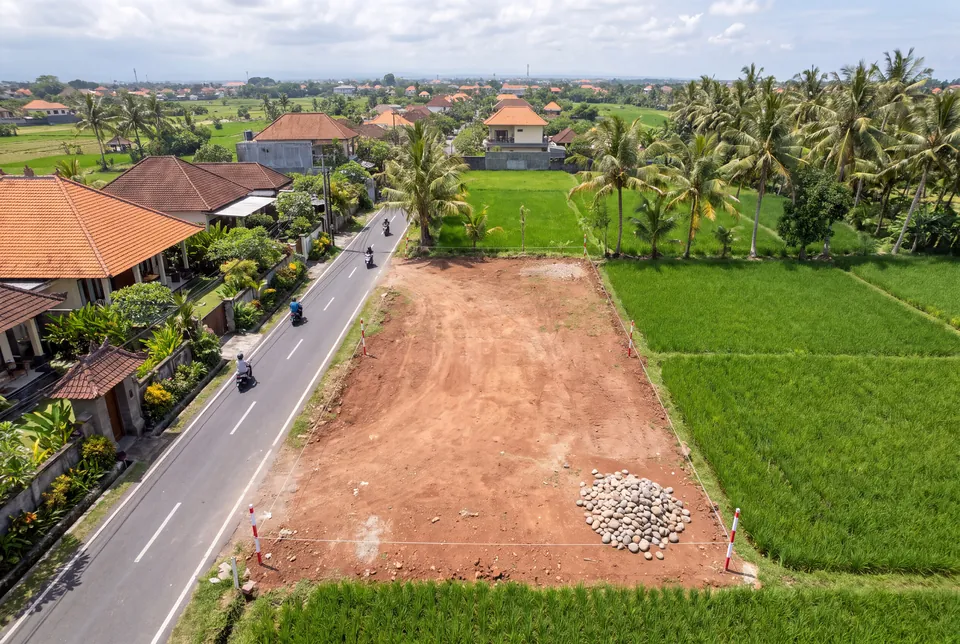
Where a restaurant share fits: the case for and against.
For
- The licence route is documented: KBLI 56101 allows full foreign ownership and is classed medium-high risk, above the tiers reported as blocked (Hukumonline, June 2026).
- Food and drink is the second-largest line of visitor spending in Bali after accommodation (BPS Bali), about 18.5% of foreign-tourist spending nationally.
- On tourism-zoned dry land, with a notarised lease held by the company, the land and licence questions are answered before money goes into concrete.
Against
- It is an operating business. Published margin benchmarks for Indonesia are 5–12% net for casual dining and 10–20% for fine dining (Klikit, 2026, an interested party).
- Commercial leases are often prepaid for 5 or 10 years, far shorter than a 25–30 year villa lease, so renewal risk arrives sooner.
- Bar-led concepts may fall under a 40–75% entertainment tax instead of the 10% restaurant tax, depending on licensing (Pajakku, reported).
- Nobody can promise you a return, and we do not.
What we do, and what to send on WhatsApp.
We open, build and co-own restaurants in Bali; construction is done by the Kimo Construction team. We are one option on your list, and a biased one.
In co-ownership you hold shares in the Indonesian company (PT PMA) that holds the lease and licences, with a shareholders' agreement drafted by a notary. Ticket size, reporting and exit terms are set per project and sent as a project sheet on WhatsApp. The mechanics are in how restaurant co-ownership works; the offer is on the restaurant investment page. If you would rather own a whole venue, the cost calculator gives a first budget; its figures are indicative ranges for 2026, and a fixed price follows drawings and a bill of quantities.
Message us on WhatsApp with your budget range, the assets you are comparing, the area you prefer and how involved you want to be. We reply with the questions to ask for each. Readers in Australia: see investing in Bali from Australia.
Questions we get on WhatsApp
Can foreigners invest in Bali without an Indonesian partner?
Yes, in sectors open to full foreign ownership. A restaurant under KBLI 56101 can be 100% foreign-owned through a PT PMA (Hukumonline, June 2026). See what a foreigner can and cannot own.
What is the minimum needed to invest in Bali for foreigners through a company?
A PT PMA needs IDR 2.5 billion of paid-up capital and an investment plan above IDR 10 billion, excluding land and buildings (BKPM Regulation 5/2025). A share in an existing company can be smaller and is set per project. Details are on the licences page.
Is it still worth it to invest in Bali villas in 2026?
It can be, if the villa has a tourism licence held by a company and stands on correctly zoned land. Both sides are in is it worth buying a villa in Bali.
How long before an investment in Bali is operating?
Published agent timelines put company set-up and the business number (NIB) at 4–8 weeks (MistSystem; Amoda). A new restaurant from leased land to opening day takes 9–14 months on our planning estimate. See the build timeline.
How do I invest in Bali with less than the price of a whole venue?
By taking a share in the PT PMA that owns the lease and licences, with the ticket set per project. A restaurant share carries operating risk and no promised return. Ask for the current sheet through the investment page.
Read next
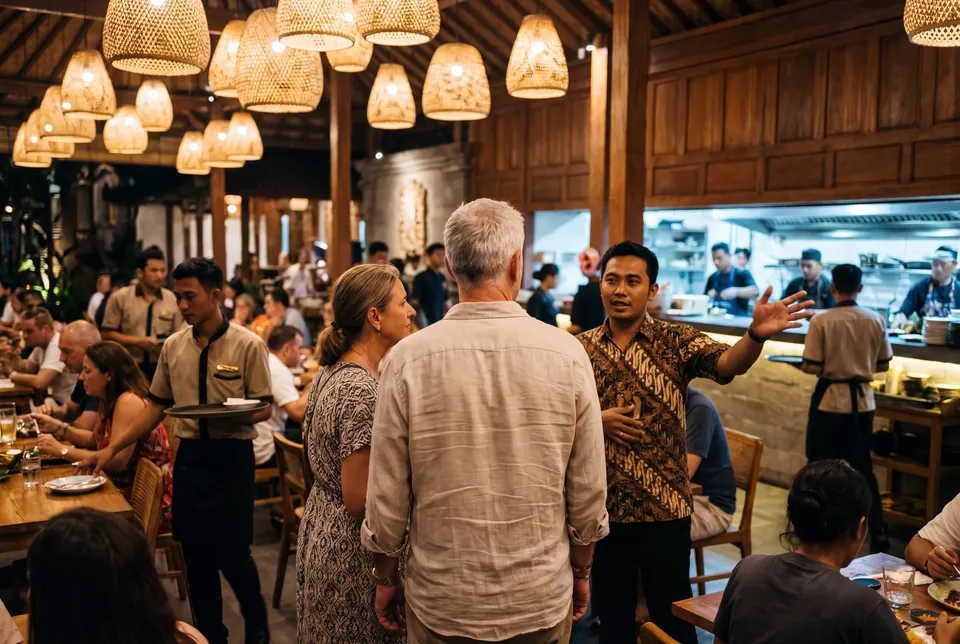
Co-ownership
Bali restaurant investment by co-ownership: shares in the PT PMA holding lease and licences, 2026 capital rules, no return promises. Ask on WhatsApp.
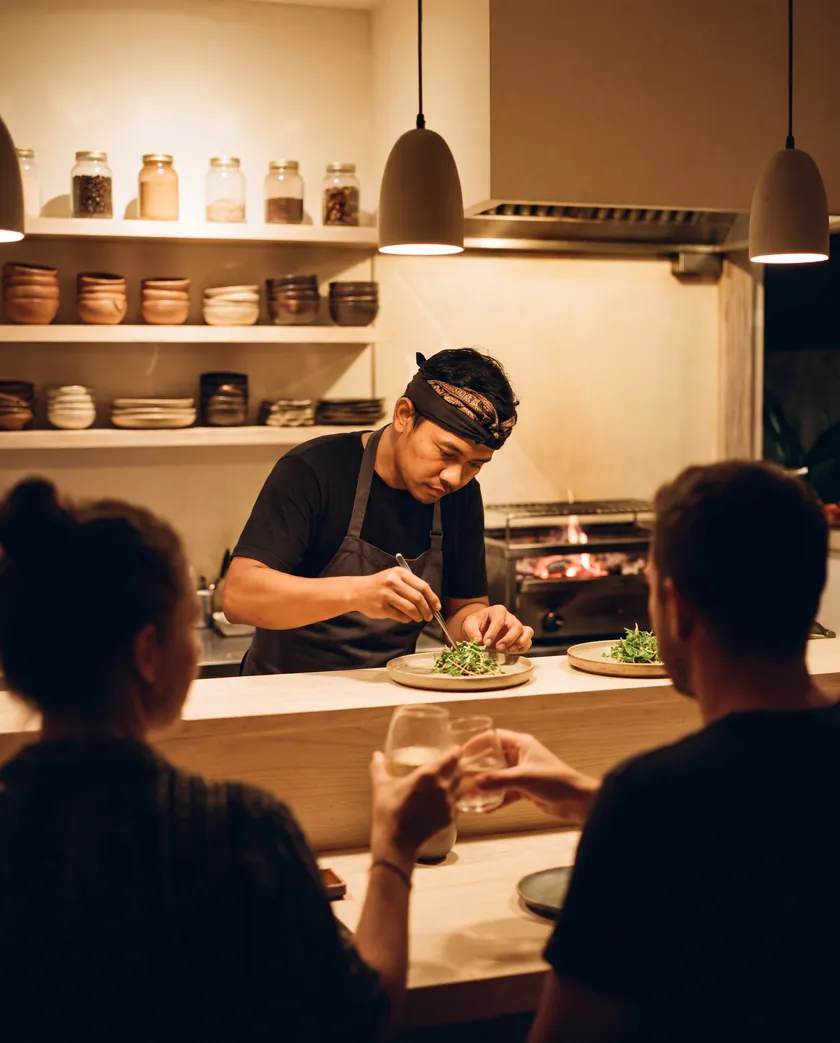
Hospitality investment
Bali hospitality investment in 2026: hotel occupancy by area, where the tourist dollar goes, F&B margin benchmarks and what you own. Ask us on WhatsApp.
Bali property: both sides
Is buying property in Bali a good investment in 2026? Hotel occupancy 74%, Canggu 60%, new licence rules: both sides with sources. Questions on WhatsApp.