Co-ownership explained
Restaurant co-ownership in Bali: how the shares, the agreement and the exit work.
Restaurant co-ownership in Indonesia means holding shares in the limited company that owns the lease and the licences, under a shareholders' agreement that says who decides what, what you are shown each month and how you leave. For a foreign investor in Bali that company is a PT PMA with at least IDR 2.5 billion of paid-up capital (BKPM Regulation 5/2025). This guide explains each document and clause, what to ask an operator for, and the red flags. It promises no return.

What you own in a restaurant co-ownership: shares in a PT PMA.
A restaurant is not a legal person. The company behind it is. For foreign owners in Indonesia that company is a PT PMA, a foreign-owned limited company. It signs the lease, holds the business number (NIB) and the licences under restaurant code KBLI 56101, employs the staff and owns the kitchen.
A co-owner holds a percentage of that company's shares, written into the company deed by a notary. Restaurants are open to 100% foreign ownership (Hukumonline, 25 June 2026), so no Indonesian name is needed to make the structure legal. An Indonesian citizen holding land or shares on your behalf is a nominee arrangement, and Bali's Regional Regulation 4/2026 is reported to prohibit nominee land ownership with criminal sanctions (RRI Denpasar).
A share is not a title to the land, not a right to a monthly cheque and not a loan that must be repaid. It is a slice of a company whose value is whatever the lease, the licences, the equipment and the trade are worth on the day.
The investment-plan threshold for food and beverage is counted per regency, so one company can hold several outlets in the same regency (BKPM Regulation 5/2025, via Hukumonline). Ask which outlets sit inside the company. You share in all of them.
Restaurant investment structure: equity, profit-share or loan.
| Question | Equity: shares in the PT PMA | Profit-share contract | Loan to the operator |
|---|---|---|---|
| What you hold | Shares recorded in the company deed | A private contract with the operator | A debt claim |
| Claim on lease, licences, equipment | Indirect, through the company that owns them | None | None, unless security is agreed |
| Your voice | Shareholder votes, plus the reserved matters in the agreement | Only what the contract grants | None |
| How you are paid | Dividends from profit after corporate income tax of 22% | A share of “profit” as the contract defines it | Interest and repayment, due whether or not the venue profits |
| Main weakness | A minority can be outvoted where the agreement is silent | Profit can be defined away through fees and related-party costs | Credit risk with none of the upside |
Our own summary of common structures, not legal advice. Corporate income tax rate per ASEAN Briefing; foreign ownership of KBLI 56101 per Hukumonline, 25 June 2026. Have an Indonesian notary or lawyer confirm how each structure is documented.
The numbers every co-owner should have on one page.
| Item | Figure | Source |
|---|---|---|
| Minimum paid-up capital of the company | IDR 2.5 billion (about USD 150,000) | BKPM Regulation 5/2025, Article 26(10) |
| Minimum investment plan, land and buildings excluded | above IDR 10 billion, counted per regency for food and beverage | BKPM Regulation 5/2025, via Hukumonline |
| Corporate income tax | 22%; half that rate on part of the profit for companies with turnover up to IDR 50 billion | ASEAN Briefing |
| Dividend withholding to a shareholder abroad | the standard rate must be confirmed | not verified in our research |
| Partial stakes advertised on a marketplace | 40% of an Ubud venue for USD 790,000; 70% of a pre-opening concept for IDR 5.1 billion (about USD 309,000) | Smergers listings; self-reported |
| Foreign-owned businesses investigated in Bali, 2025–26 | 426 investigated, 423 sanctioned | Emerhub, 18 May 2026 |
Sources as named in each row, checked 12 November 2026. Marketplace figures are asking prices set by sellers and say nothing about value. No figure here is a forecast for any venue.
The shareholders' agreement, clause by clause.
The company deed says who owns how much. The shareholders' agreement says how the owners behave. For a minority investor five clauses do the work.
Reserved matters
Decisions the majority cannot take alone: new debt or guarantees, issuing new shares, selling or sub-leasing the site, replacing the operator, contracts with companies the operator owns, opening a second outlet inside the same company.
Reporting
A monthly profit-and-loss statement by a named date, read-only access to the point-of-sale system, the bank balance and annual accounts.
Dividend policy
What is held back before anything is paid out: working capital, a repair reserve and a reserve for lease renewal. Commercial leases in Bali are often prepaid for 5 or 10 years (Emerhub, reported), and an extension is a new deed at the land value of that day. A venue that pays out everything has nothing left when the landowner names a price.
Pre-emption
If one shareholder sells, the others have first refusal at the same price. The clause should say how the price is set when the parties disagree.
Exit
The right to sell alongside the majority on the same terms (tag-along), the majority's right to require a sale of the whole company (drag-along), any buy-back formula, and what happens to the company when the lease ends.
Ask the notary which of these clauses also go into the company's articles. This page is not legal advice.
Silent partner in a restaurant: what silent can and cannot mean.
People who search “silent partner restaurant” usually want two things: no shifts in the kitchen, and a say when it matters. Restaurant co-ownership can give both, on one condition. Be silent in the kitchen, never on paper.
In a limited company the directors run the business and the shareholders vote on the large decisions. That suits an investor abroad. It also means a shareholder with no reserved matters and no reporting rights has handed over money and kept nothing but hope. Plan on reading the figures every month and voting a few times a year.
How to invest in a restaurant: what to ask the operator for before you pay.
- The company deed and the business number (NIB): which business codes are registered, and who the directors and shareholders are.
- The zoning confirmation (KKPR) for the exact plot, and the lease deed in the company's name with the years remaining.
- Building approval (PBG) for the design and, once built, the worthiness certificate (SLF) and the hygiene certificate (SLHS).
- The build budget as a bill of quantities with stage payments, not one round number.
- The operator's management contract: the fee, the term, how it ends, and any supplier the operator owns.
- A sample of the monthly report you will receive, and confirmation of read-only access to point-of-sale data.
- The opening budget: pre-opening costs, working capital, and what happens if more capital is needed.
- The draft shareholders' agreement, before any deposit, with the exit clause in plain words.

Red flags when you buy a share in a restaurant.
- A stated yield or payback period. One broker blog claims payback in about two years for small Bali venues (DDA, October 2025), a promotional claim with no data shown.
- A profit-share letter instead of shares. You fund the venue and own none of it.
- A nominee. A share or a plot held in someone else's name is theirs on paper.
- No zoning document. “We will get it after the lease” is how capital ends up on protected farmland.
- A disputed business code. Consultants disagree on whether cafés (KBLI 56303) can still be registered by new foreign companies in Bali. Have the code confirmed with a licensing agent first.
- A short lease with no extension terms. The venue can trade well and still lose its site.
- “Profit” after undefined fees. Management fees and supplier margins taken before the line you are paid from.
- Reports as summaries only. No point-of-sale access.
- Payment to a personal account. Share capital goes to the company's account, against a notarial deed.
- An operator with nothing at stake. Ask what the operator has invested.
The same checks apply when you buy into an existing venue; see buying versus building a restaurant.
From first message to shareholder: the order of events.
- 01
Project sheet
Concept, area, seats, build budget, ticket size, reporting and exit terms. Ours is sent on WhatsApp.
- 02
Documents and your own review
Zoning confirmation, lease, company papers and the bill of quantities. A lawyer or notary you chose reads the draft agreement; your tax adviser at home sees the structure.
- 03
Signing at the notary
The deed records your shares, the agreement is signed, and the money goes to the company's account.
- 04
Build and opening
Stage payments against milestones, then licences, staff training and opening. Our planning estimate for a new build is 9–14 months.
- 05
Operation
Monthly figures, votes on reserved matters, and dividends when the policy allows them.
How we handle co-ownership.
We open, build and co-own restaurants in Bali, with construction by the Kimo Construction team. You hold shares in the Indonesian company (PT PMA) that holds the lease and licences, with a shareholders' agreement drafted by a notary. Ticket size, reporting and exit terms are set per project and sent as a project sheet on WhatsApp.
Our side: the zoning check before a lease is signed, design, building approval, construction, kitchen, licences with partner notaries and consultants, and the opening. The offer is on the restaurant investment page, the licence set on the licences page. The cost calculator shows what a whole venue costs; its figures are indicative ranges for 2026, and a fixed price follows drawings and a bill of quantities.
Other asset types are compared in how to invest in Bali; cross-border checks are in investing in Bali from Australia. When a sheet names an area, read its page first, for example Canggu or Pererenan and Seseh. Then message us on WhatsApp with the size of share you have in mind and the area you prefer.
Questions we get on WhatsApp
Can a foreigner buy a share in a restaurant in Bali?
Yes. A restaurant under KBLI 56101 may be fully foreign-owned through a PT PMA (Hukumonline, June 2026), so a foreign investor can hold shares in their own name. The company-level rules are in can a foreigner open a restaurant in Bali.
Is a silent partner in a restaurant protected in Indonesia?
Only by what is written down: shares recorded in the company deed and a shareholders' agreement with reserved matters, reporting and exit clauses. More in owning a business in Bali.
How are restaurant dividends taxed in Indonesia?
The company first pays corporate income tax of 22% on its profit (ASEAN Briefing). Tax is then withheld on dividends paid to a shareholder abroad; the standard rate, and any treaty effect, must be confirmed with a tax consultant. What your home country does with the dividend is for your own adviser; see the cross-border notes.
What restaurant investment structure suits a minority investor?
Equity with a short list of reserved matters, monthly reporting and tag-along rights. Our terms are set per project; see the investment page.
How do I exit a restaurant co-ownership?
Through the clauses agreed at the start: first refusal for the other shareholders, a sale alongside the majority, or a buy-back formula. There is no public market for shares in a private restaurant company. How whole businesses change hands is in how to buy a business in Bali.
Read next
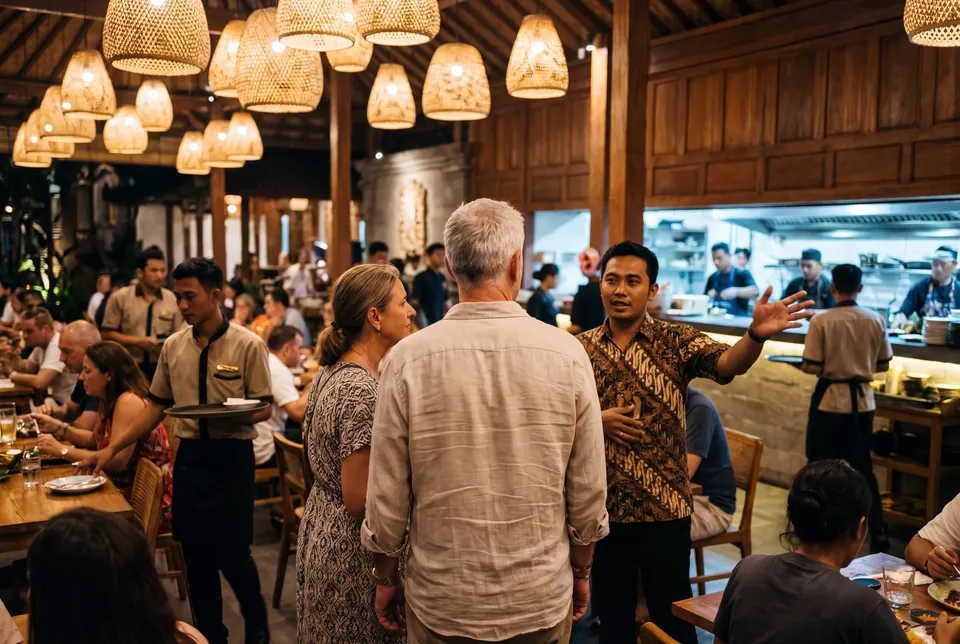
Co-ownership
Bali restaurant investment by co-ownership: shares in the PT PMA holding lease and licences, 2026 capital rules, no return promises. Ask on WhatsApp.
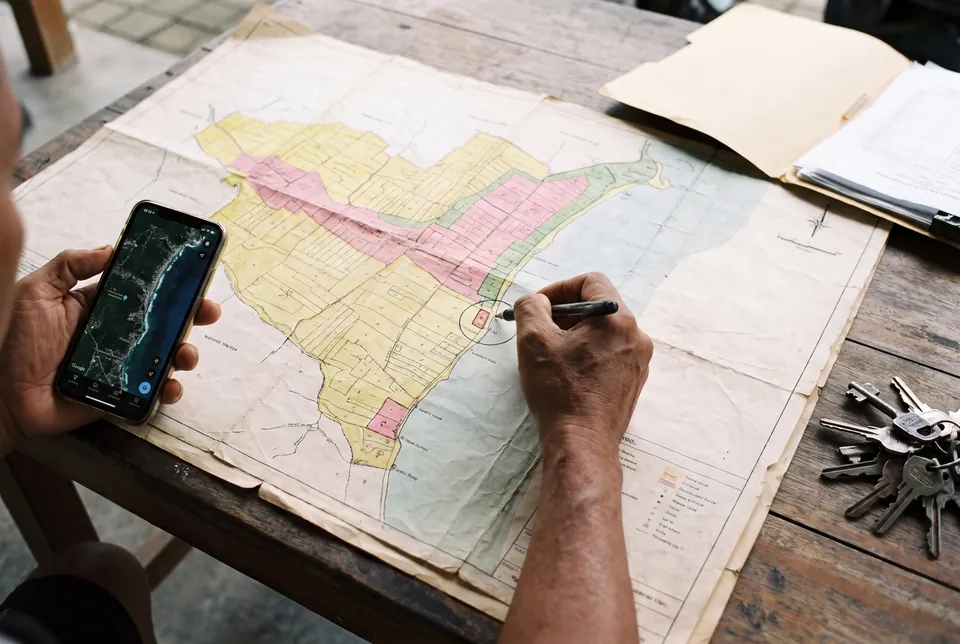
How to invest in Bali
How to invest in Bali as a foreigner in 2026: six asset types compared by ticket, licence route, operator and main risk. Send your shortlist on WhatsApp.
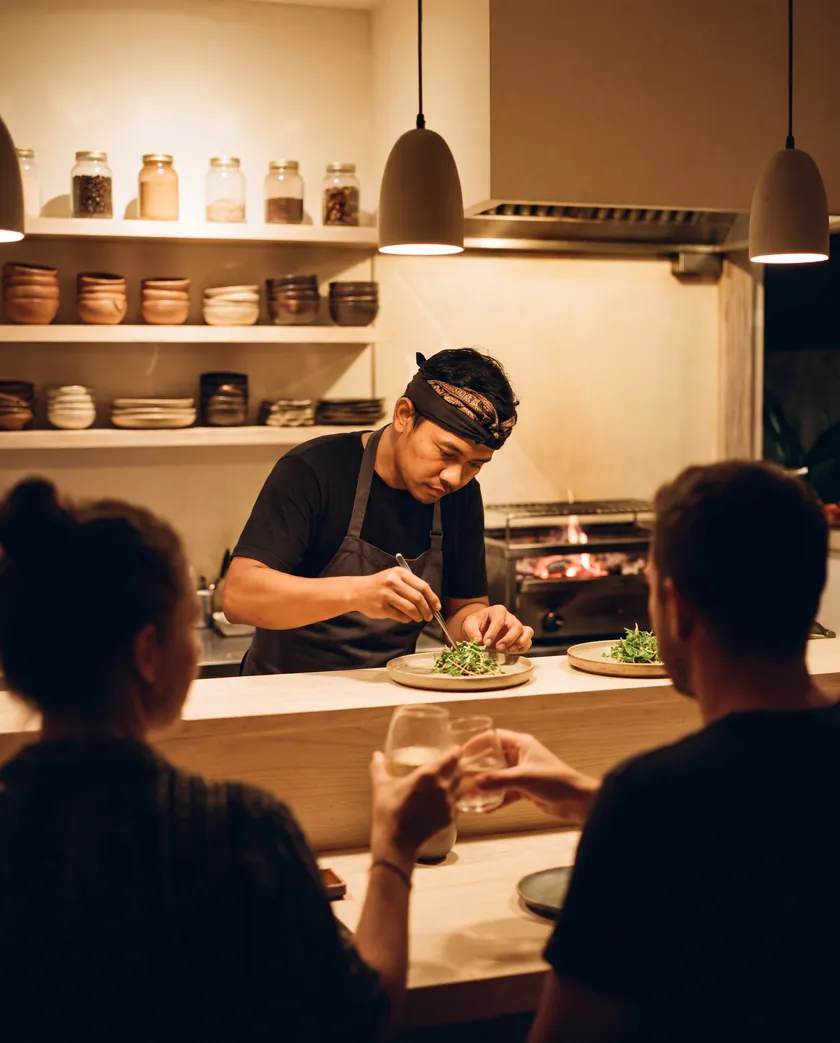
Hospitality investment
Bali hospitality investment in 2026: hotel occupancy by area, where the tourist dollar goes, F&B margin benchmarks and what you own. Ask us on WhatsApp.