Rooms vs tables
Bali hospitality investment: hotel rooms or food and drink, compared on 2025 data.
Bali hospitality investment splits into two businesses that share one guest: rooms, and food and drink. In 2025 the island's hotels ran at 74% occupancy on record foreign arrivals of 6.95 million (Horwath HTL, March 2026), while demand for commercial property fell 4.8% year on year in the fourth quarter (Bank Indonesia Bali). Both facts are true. This guide sets out what each side earns from, what an investor owns in each case, and where the risk sits.
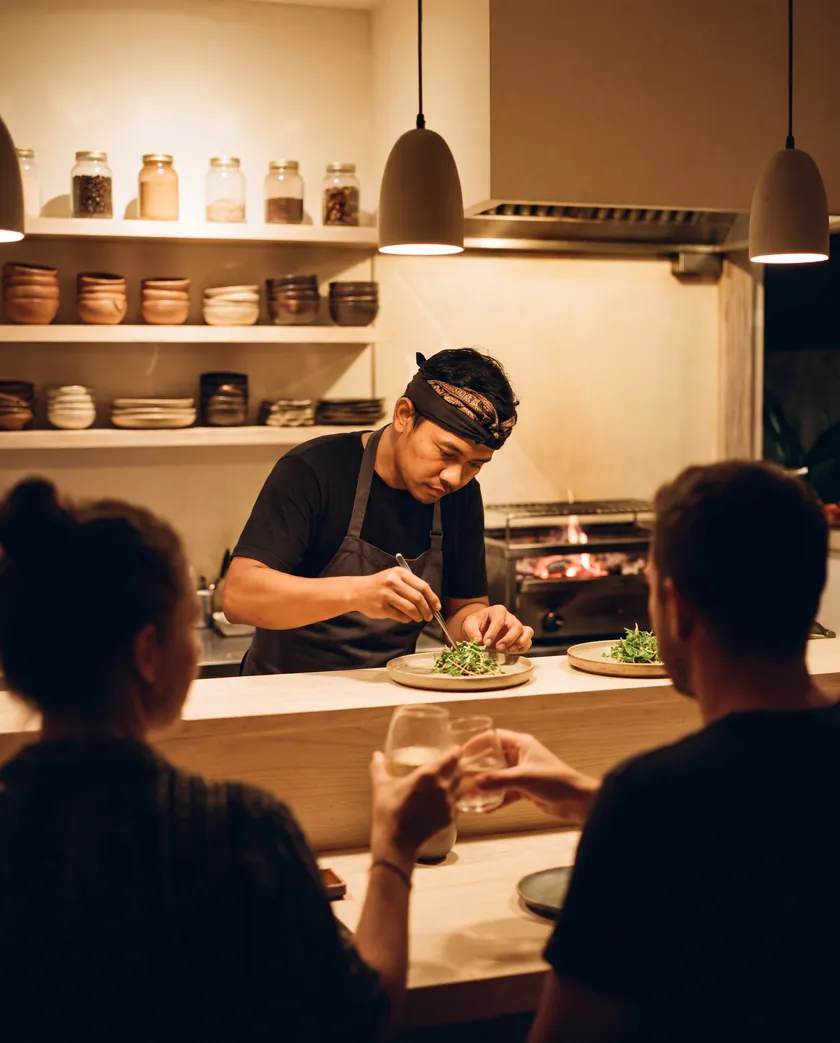
Bali hospitality investment in four numbers.
Sources: BPS Bali and Bali Hotels Association data in Horwath HTL (March 2026); BPS national tourism spending 2025 via Bisnis (2 February 2026); GoodStats citing BPS (6 January 2026).
Where the tourist dollar goes: rooms first, tables second.
BPS Bali reports that foreign tourists spent about IDR 2.11 million (about USD 128) per night in 2025, up from IDR 2.05 million in 2024 (ANTARA, 24 August 2026). Accommodation is the largest category, food and drink the second, entertainment the third.
The national breakdown gives the proportion. Food and drink took 18.54% of foreign-tourist spending in Indonesia in 2025, on an average of USD 1,267 per visit (Bisnis, 2 February 2026). Apply those national averages to Bali's roughly 7 million foreign visitors and the food and drink pool comes to about USD 1.6 billion a year. That is our own rough estimate, not a measured figure, and it leaves out domestic visitors and residents.
One structural difference matters more than the size of each slice. A room sells once a night, to one booking. A table sells several times a day, to guests of every hotel and villa within reach and to people who live here. It also competes with tens of thousands of other kitchens. Neither side is easy money.
Bali hotel investment opportunity: 2025 performance by area.
| Area | Hotel occupancy 2025 | Average length of stay |
|---|---|---|
| Nusa Dua | 79.2% | 3.1 days |
| Seminyak | 74.9% | 3.2 days |
| Sanur | 69.9% | not published |
| Ubud | 68.6% | 2.5 days |
| Jimbaran and Uluwatu | 66.0% | not published |
| Canggu and Tabanan | 60.0% (down 19.5%, new sample) | 2.4 days |
| Legian | not published | 4.0 days |
| Bali, all areas | 74% (2.3% lower than 2024) | not published |
Source: Horwath HTL / C9 Hotelworks, Bali Hotel & Branded Residences 2026, March 2026, pages 3–8; data from the Bali Hotels Association. Island-wide average daily rate IDR 2.35 million (USD 150 as published), revenue per available room IDR 1.73 million. Peak month July at 85.9%; revenue per room weakest in February and March. BPS reports 61.02% for star hotels on a different sample.
Invest in a Bali resort or hotel: what you actually own.
What is sold to private investors under phrases like “invest in Bali resort” is usually not a hotel but a unit in a hospitality-managed residential project. Horwath HTL counted more than 70 such projects on sale in March 2026, about 40% of them in Canggu and Berawa, and the share of villas in that inventory rose from 13% to 18% in a year.
In that model you hold a lease on one unit, “typically between 25 and 35 years” in Horwath's words, with renewal subject to agreement. The operator holds the brand, the licences and the room rate. Your income is what the operator's occupancy leaves after its fees, and your asset is a lease with one year less on it every year. Ask what the renewal costs and who decides.
The alternative, a stand-alone villa you rent out yourself, now needs a tourism licence. Short-term rentals had to prove full licensing by 31 March 2026 or be removed from booking platforms, and the company route means a committed investment above IDR 10 billion (Horwath HTL). Real-estate code 68111 is also closed to new foreign companies in Bali; the island alone held 72.1% of national projects under it (Emerhub, 18 May 2026).
One more data set belongs in any room-side model. Bank Indonesia's Bali office recorded demand for commercial property down 4.80% year on year in the fourth quarter of 2025, with hotel demand down 6.71% and prices up 0.68% on the year but down 3.16% on the quarter (Bali Discovery, 19 February 2026). The villa arithmetic is worked through in Bali villa ROI.
F&B margin benchmarks, with their sources.
| Benchmark | Published figure | Who published it |
|---|---|---|
| Casual dining, Indonesia | 5–12% net margin | Klikit, 2026 guide |
| Fine dining, Indonesia | 10–20% net margin | Klikit, 2026 |
| Quick service, Indonesia | 8–15% net margin | Klikit, 2026 |
| Bali café under 65 seats | about USD 35,000 revenue a month, 12–18% profit | Our Year in Bali, relocation consultancy, undated |
| Bali mid-tier venue, 200–300 m² | about USD 55,000 revenue a month | Our Year in Bali |
| Small Bali venue | 15–25% net margin | DDA, property broker, October 2025; promotional |
| Bali foodservice businesses for sale | 10–40% EBITDA, self-reported by sellers | Smergers marketplace, 53 listings |
| One Uluwatu restaurant for sale | USD 17,000 profit on USD 453,000 of turnover in 12 months | Searchfunder listing |
Sources: Klikit, Restaurant Profit Margins Indonesia 2026; ouryearinbali.com; DDA Real Estate, October 2025; Smergers and Searchfunder listings seen 12 November 2026. All are benchmarks or seller statements from interested parties; none is audited.
Rooms versus tables: two risk profiles side by side.
Hotel room or managed unit
- You own a lease on a unit; the operator owns the guest relationship and holds the licences.
- Income is capped at one sale per room per night and follows the occupancy of the area.
- Little work after signing, and little control.
- Supply risk: about 40% of managed projects on sale are in the area with the lowest tracked occupancy.
- The lease shortens every year, and an extension is a new deed at the land value of that day.
Restaurant share
- You own shares in the company that holds the lease and licences, and you vote on reserved matters.
- Sales are not tied to one hotel: a restaurant serves guests of every hotel and villa nearby, and residents.
- Margins are thin and depend on the operator; see the benchmark table.
- Commercial leases are short, often 5 or 10 years prepaid, so renewal comes early.
- Zoning applies equally, and bar sales may be taxed as entertainment at 40% or more instead of 10%.
- More to read each month, and more ways to see trouble early.
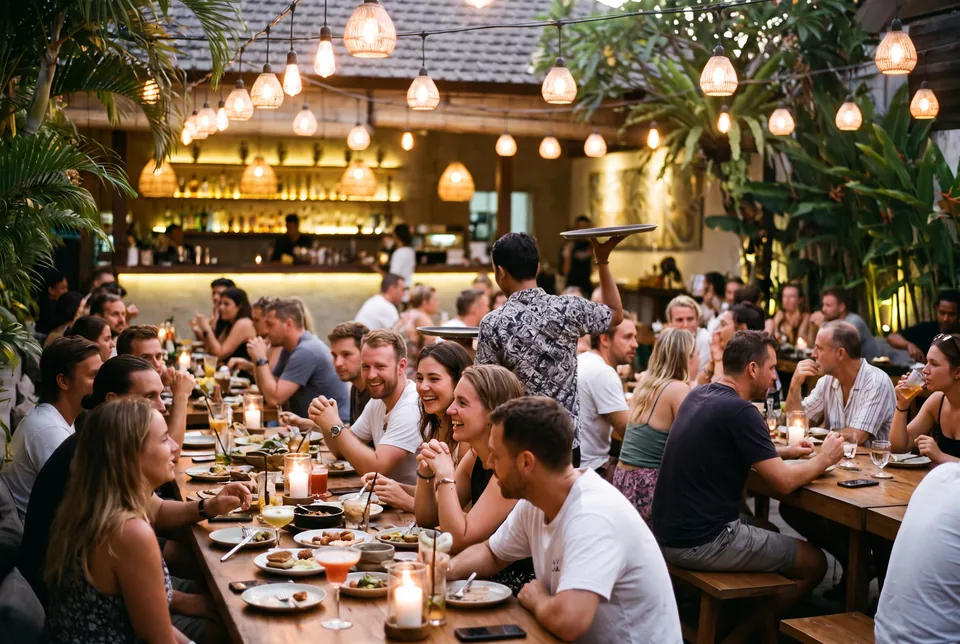
Bali restaurant investment opportunities: what a real one puts in writing.
On the food and drink side a foreign investor owns shares in a PT PMA, the foreign-owned limited company that holds the lease and the licences. Restaurants under business code KBLI 56101 may be fully foreign-owned (Hukumonline, 25 June 2026). The company needs IDR 2.5 billion of paid-up capital and an investment plan above IDR 10 billion; for food and beverage that plan is counted once per regency, so a second outlet in the same regency needs no second plan (BKPM Regulation 5/2025).
Most Bali restaurant investment opportunities reach you as a one-page teaser. A real one answers eight questions in writing:
- Which company, and which business code is on its registration.
- Which plot, with the zoning confirmation attached.
- How many years the lease runs, and what an extension costs.
- What the build costs, as a bill of quantities.
- Who operates, on what fee, and what they have at stake.
- What you receive each month.
- Which decisions need your consent.
- How you leave.
On build cost we speak from our own site data: IDR 8.5–18 million per m² for a new restaurant and IDR 4.5–14 million per m² for the fit-out of an existing building. These are indicative ranges for 2026; a fixed price follows drawings and a bill of quantities. Amoda's published Indonesia-wide range for an F&B outlet is IDR 4–15 million per m², kitchen equipment excluded (24 February 2026). Details are on the build cost page, in the cost calculator and on the licences page.
What we do on the food and drink side.
We open, build and co-own restaurants in Bali; the build team is Kimo Construction. We come to Bali hospitality investment as builders, which is why this page spends more words on leases and zoning than on sunsets.
In co-ownership you hold shares in the Indonesian company (PT PMA) that holds the lease and licences, with a shareholders' agreement drafted by a notary. Ticket size, reporting and exit terms are set per project and sent as a project sheet on WhatsApp. We state no expected return. The clauses are explained in restaurant co-ownership in Bali, the offer is on the investment page, and other asset types are compared in how to invest in Bali.
Send us a WhatsApp message with your budget range, the area you are looking at and whether you lean towards rooms or tables. If you already hold an offer for a hotel unit, send its lease term and location pin. We will tell you what we would check on that plot before signing anything.
Questions we get on WhatsApp
Is a Bali hotel investment opportunity safer than a restaurant share?
It carries different risks, not fewer. A managed unit depends on area occupancy, new supply and a lease that runs down; a restaurant share depends on the operator and on thin margins. Both fail on wrongly zoned land. See is buying property in Bali a good investment.
Can a foreigner invest in a hotel in Bali directly?
Operating a hotel needs a foreign-owned company (PT PMA) with an investment plan above IDR 10 billion; private buyers are usually offered a leased unit in a managed project instead. Foreign individuals cannot directly hold the tourism licence a short-term rental needs (Horwath HTL, March 2026). See can foreigners buy property in Bali.
What occupancy should I assume if I invest in a Bali resort unit?
Start from the Horwath figure for that area, not the island average. One agency says average villas struggle to hold 45–60% in shoulder seasons (Kibarer, February 2026); that is an agency view with no method disclosed. Area detail is on Jimbaran and Nusa Dua and Canggu.
What margins do restaurants in Bali make?
No audited Bali study exists. Published benchmarks for Indonesia range from 5–12% net for casual dining to 10–20% for fine dining (Klikit, 2026), from an interested party. More sectors are compared in most profitable business in Bali.
Where are Bali restaurant investment opportunities listed?
Marketplaces list businesses and partial stakes with seller-reported figures. We do not publish a list: the current project sheet is sent on WhatsApp. Start from the restaurant investment page.
Which area is strongest for hospitality investment in Bali?
On 2025 hotel occupancy, Nusa Dua led and Seminyak followed (Horwath HTL). The strongest area for rooms is not automatically the right one for a new restaurant; compare them in the area guide and on the Seminyak page.
Read next
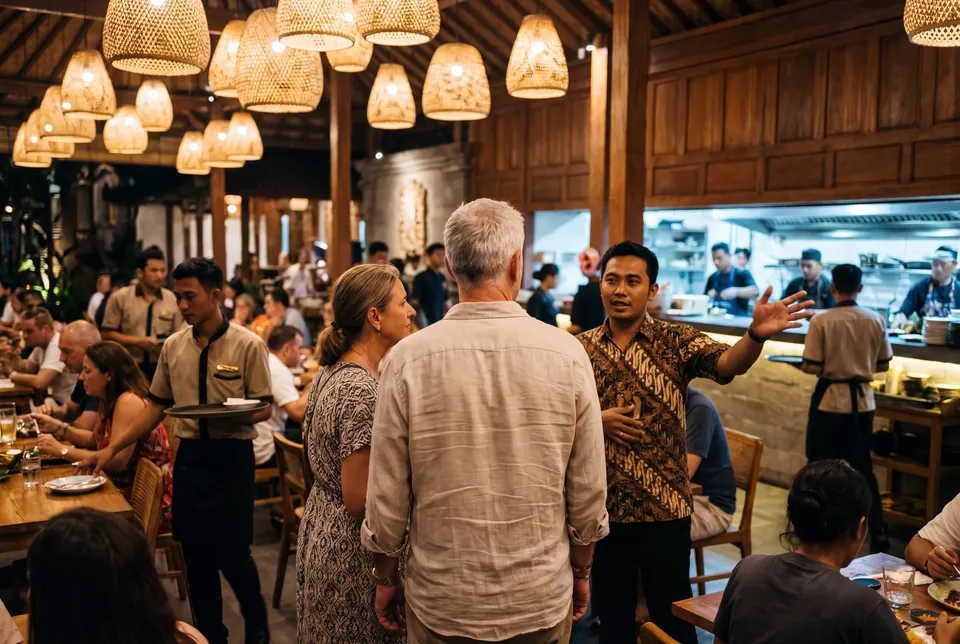
Co-ownership
Bali restaurant investment by co-ownership: shares in the PT PMA holding lease and licences, 2026 capital rules, no return promises. Ask on WhatsApp.
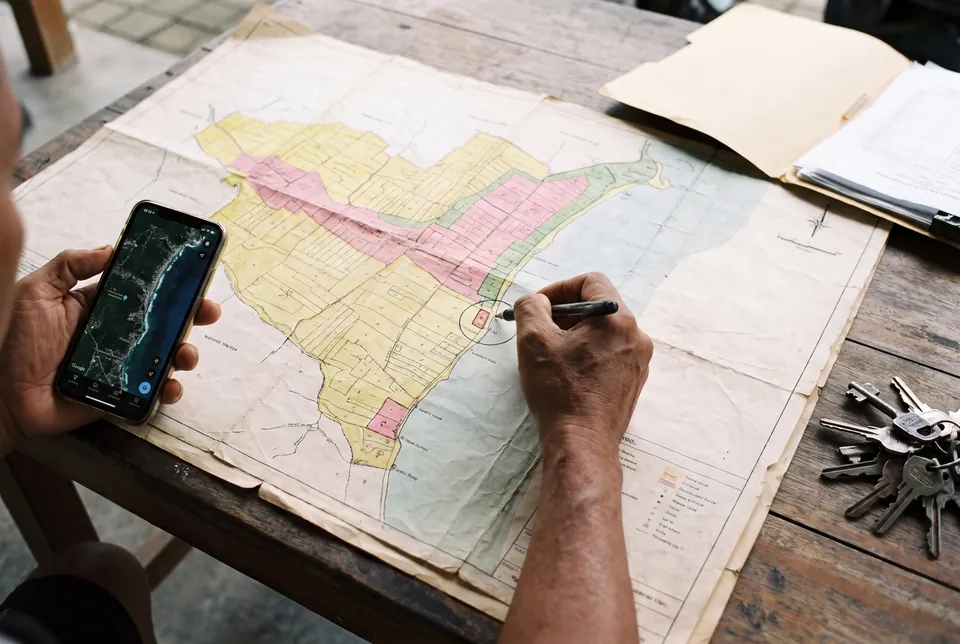
How to invest in Bali
How to invest in Bali as a foreigner in 2026: six asset types compared by ticket, licence route, operator and main risk. Send your shortlist on WhatsApp.
Most profitable business in Bali
The most profitable business in Bali, judged by published margins: restaurants 5–20% net, hotels at 74% occupancy, and what profit hides. Ask on WhatsApp.