The maths, rebuilt
Bali villa ROI: rebuild the developer's sheet with sourced numbers.
Bali villa ROI on a sales sheet is often quoted gross: nightly rate times nights sold, divided by the price. What you keep is what remains after vacancy, discounts, platform commission, the manager's fee, upkeep and tax, and after one line most sheets leave out: the lease running down by a year every year. This guide rebuilds the sheet with 2025 data from Horwath HTL, labels agency opinions as opinions, and marks every assumption as an assumption.

Bali villa ROI in one formula.
Net return = (nights sold × achieved nightly rate − platform commission − management fee − running costs − lease decay − tax) ÷ everything you paid.
Each term can be checked. Nights sold comes from occupancy, and measured occupancy exists for hotels. The achieved rate is what guests paid after discounts, not the rate card. Commission and the management fee sit in contracts you can ask to see. Lease decay is plain arithmetic. “Everything you paid” means the price plus purchase costs, furniture, and the company and licences if the villa is to be rented legally.
Below, each term in turn. Where a number has a named source we say so; where none exists we use a placeholder for you to replace with your own contract figure.
Occupancy: the inputs you can source for 2025–2026.
| Source | Figure | What it measures | How firm |
|---|---|---|---|
| Horwath HTL, all Bali | 74% | Hotel occupancy in 2025, Bali Hotels Association data | Measured; hotels only |
| Horwath HTL, Nusa Dua | 79.2% | Hotel occupancy in 2025 | Measured; hotels only |
| Horwath HTL, Canggu and Tabanan | 60% | Hotel occupancy in 2025, on a new hotel sample | Measured; hotels only |
| Horwath HTL, July peak | 85.9% | The best month of 2025 for hotels | Measured |
| BPS, the statistics agency | 61.02% | Star-hotel occupancy in Bali, 2025 | Official statistic |
| Kibarer | 45–60% | Average villas in the shoulder seasons | Agency view; no method published |
| Villa Finder | 66% falling to 56% | Projected villa occupancy for 2026 | Reported projection; no method published |
Sources: Horwath HTL / C9 Hotelworks, “Bali Hotel & Branded Residences 2026”, March 2026; BPS via Databoks; Kibarer, 13 February 2026; Villa Finder (reported projection). No audited occupancy series for private villas exists in the sources we could verify.
The lines a sales sheet tends to leave out.
Achieved rate
Kibarer reports owners discounting 10–30% to hold bookings. That is an agency observation; ask the seller for the average rate actually received over twelve months. As a cross-check, the 2025 average daily rate across Bali hotels was IDR 2.35 million, roughly USD 150 (Horwath HTL).
Commission and management fee
We found no reliable island-wide figure for booking-platform commission or villa management fees, so we will not quote one as fact. Both are in documents: the platform's terms and the management agreement. Read whether the manager's percentage is charged on gross bookings or on what is left after commission, and which costs are passed to the owner on top.
Running costs
A rental villa has staff, power, water, pool and garden care, linen, internet and repairs in a humid, salty climate. One line can be sourced: the 2026 minimum wage in Badung is IDR 3,791,003 a month per full-time employee (Governor's Decree on 2026 minimum wages). The rest should come from a manager's statements for a comparable villa, not from a brochure.
Tax
A company pays corporate income tax at 22%; companies with turnover up to IDR 50 billion get a 50% rate reduction on the taxable income from their first IDR 4.8 billion of turnover (ASEAN Briefing). The 0.5% final tax on turnover is reported closed to companies since Government Regulation PP 20/2026 took effect on 22 April 2026. Tax on moving profit to you personally depends on your country and any treaty. Confirm all of it with a tax adviser.
Lease decay: the cost that never arrives as a bill.
A foreign buyer of a Bali villa usually holds a lease, not freehold. Agents describe a typical private lease as 25–30 years, and Horwath HTL puts leases in hospitality-managed developments at 25 to 35 years, with renewal “subject to agreement”. An extension is described as a new deed priced at the land value of that day, which makes it a second purchase and not a continuation. Confirm how your deed handles it with a notary.
So the lease is a wasting asset. Spread evenly, a 25-year lease loses 4.0% of its price every year, a 30-year lease 3.3% and a 35-year lease 2.9%. A sheet that shows 10% a year on a 25-year lease is showing 6% once the lease is counted, before any other line. A resale villa with 14 years left loses 7.1% a year.
Resale does not escape the sum. A buyer in year ten is purchasing fifteen years and will do the same arithmetic.
Worked example: one hypothetical villa, three occupancy cases.
The villa is invented for round numbers: USD 250,000 for a 25-year lease. The nightly rate of USD 150 is borrowed from the 2025 hotel average, because no audited villa rate exists. The three percentages marked “placeholder” are not market data. Replace them with your contract figures.
| Line | Brochure case | Island-average case | Canggu-level case |
|---|---|---|---|
| Occupancy | 80%, an assumed brochure figure | 74% (Horwath HTL, all-Bali hotels) | 60% (Horwath HTL, Canggu and Tabanan hotels) |
| Nights sold | 292 | 270 | 219 |
| Achieved nightly rate | USD 150 | USD 150 | USD 135, a 10% discount (low end of Kibarer's reported range) |
| Gross rental income | USD 43,800 | USD 40,500 | USD 29,565 |
| Platform commission, 15% placeholder | not shown | − USD 6,075 | − USD 4,435 |
| Management fee, 20% of the remainder, placeholder | not shown | − USD 6,885 | − USD 5,026 |
| Running costs, 15% of gross, placeholder | not shown | − USD 6,075 | − USD 4,435 |
| Lease decay, USD 250,000 over 25 years | not shown | − USD 10,000 | − USD 10,000 |
| Left before tax | USD 43,800 | USD 11,465 | USD 5,669 |
| As a share of the price | 17.5% | 4.6% | 2.3% |
Inputs: occupancy and hotel rate from Horwath HTL / C9 Hotelworks, March 2026; discount range from Kibarer, February 2026 (agency view). The price, the lease length and the three placeholder percentages are our assumptions, used for arithmetic only. An illustration of method, not a forecast for any villa.
Nine questions to put to any Bali villa ROI sheet.
- Is the return gross or net, and net of what.
- Which occupancy is assumed, and what comparable villas in the same street achieved over the last twelve months.
- Whether the nightly rate is a rate card or the average received after discounts.
- What the booking platform takes and what the manager takes, and on which base.
- Which running costs are the owner's: staff, power, pool, repairs, replacements.
- How many years are left on the lease, and what an extension costs under the deed.
- Who holds the short-term rental licence, and whether the listing passed the 31 March 2026 check.
- Whether the return is “guaranteed”, by which company, backed by what.
- Which tax applies to the company and to you, and whether a tax adviser has seen the sheet.

Bali property ROI against a restaurant share: a different risk profile.
We build and co-own restaurants, and we will not tell you the maths is kinder there. It is different.
A restaurant is an operating business. Published benchmarks for Indonesia put net margins at 5–12% of sales for casual dining and 10–20% for fine dining (Klikit, 2026). A broker's article claims 15–25% with payback in about two years. Both come from interested parties, and no independent payback study for Bali restaurants exists. The resale market offers a sobering data point: an Uluwatu restaurant listed for sale reports USD 453,000 of turnover and USD 17,000 of profit over twelve months, under 4%.
Lease decay is faster, not slower. Restaurant premises in Bali are commonly leased with only 5 or 10 years paid up front, as licensing consultants report, so a fit-out must pay for itself within a shorter term than a villa lease. For scale, our indicative 2026 range for an 80-seat restaurant built on empty land is IDR 3.5–4.7 billion (about USD 213,000–286,000); a fixed price follows drawings and a bill of quantities.
What changes is where the uncertainty sits. When the plot is dry and zoned for tourism or commerce, the building approved and the lease notarised in the name of a PT PMA, a restaurant leaves fewer land and licensing unknowns than a villa bought via a nominee or let without a tourism licence. Its risk is operational: the kitchen, the team, the lease renewal, 64,521 other venues (BPS, 2024). The operator's track record and monthly reporting carry the weight that zoning and licences carry for a villa.
Our co-ownership offer is shares in the Indonesian company (PT PMA) that holds the lease and licences, with a shareholders' agreement drafted by a notary; ticket size, reporting and exit terms are set per project and sent as a project sheet on WhatsApp. We quote no expected return. See what a share in a restaurant involves and what a co-owner should ask for.
Compare two investment sheets on the same basis.
- 01
Same years
Model both over the years the lease really has, lease decay included.
- 02
Same proof
Separate verified history (bank statements, platform or point-of-sale reports) from projections. Give weight only to the first.
- 03
Same risks named
For the villa: licence, zoning, lease, supply. For the restaurant: zoning, lease term, operator, margins. The red-flag list covers both.
- 04
Same bad year
Ask each seller what happens in a weak February and March, in a licence audit, or when the manager leaves. Our investing guide puts six asset types through the same test.
Questions we get on WhatsApp
What is a realistic Bali villa return on investment?
No audited figure exists. In our worked example a 17.5% brochure number falls to between 2.3% and 4.6% before tax once vacancy, placeholder fees, upkeep and lease decay are counted; your contract figures will differ. Start from measured occupancy, as in our both-sides property guide.
Is a guaranteed Bali investment ROI worth anything?
A guarantee is a promise by a company, so it is worth what that company can pay. Ask which entity signs it, for how long, and what backs it. Unbacked guarantees are among the warning signs in our red-flags guide.
Where can I find honest Bali villa investment reviews?
Forum threads and agency blogs are anecdotes or sales material. The most reliable review is documentary: twelve months of booking statements, the licence, the zoning confirmation and the lease deed for the specific villa. Our villa buyer's checklist lists them.
Does leasehold reduce Bali property ROI?
Yes, by the price divided by the years left: 4.0% a year on a 25-year lease, 3.3% on 30 years. See how leasehold works for foreigners.
Do hotels in Bali perform better than villas?
Hotels have measured data: 74% occupancy in 2025 at an average rate of about USD 150 (Horwath HTL). Villas have no audited series, and unlicensed ones face removal from booking platforms. Rooms versus food and drink looks at where the visitor's money goes.
Does a restaurant share give a higher ROI than a villa?
We do not claim that, and we promise no return. Margin benchmarks run from 5% to 20% of sales and come from interested parties. Put a seat count into the cost calculator, then request the current project sheet to judge a real case.
Read next
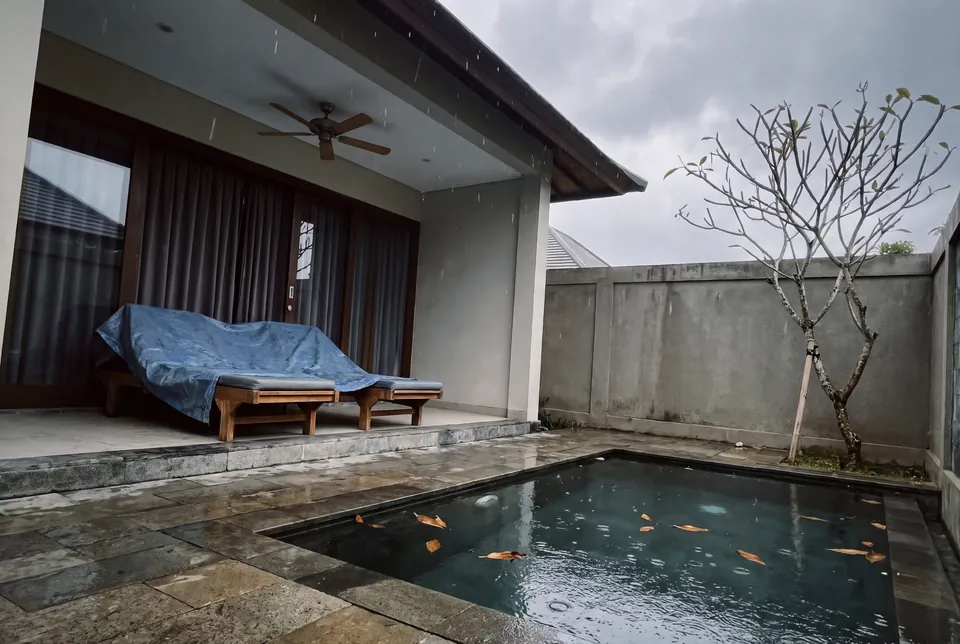
Buying a villa in 2026
Is it worth buying a villa in Bali in 2026? The 31 March licence deadline, company capital rule, occupancy data and a deposit checklist. Ask on WhatsApp.
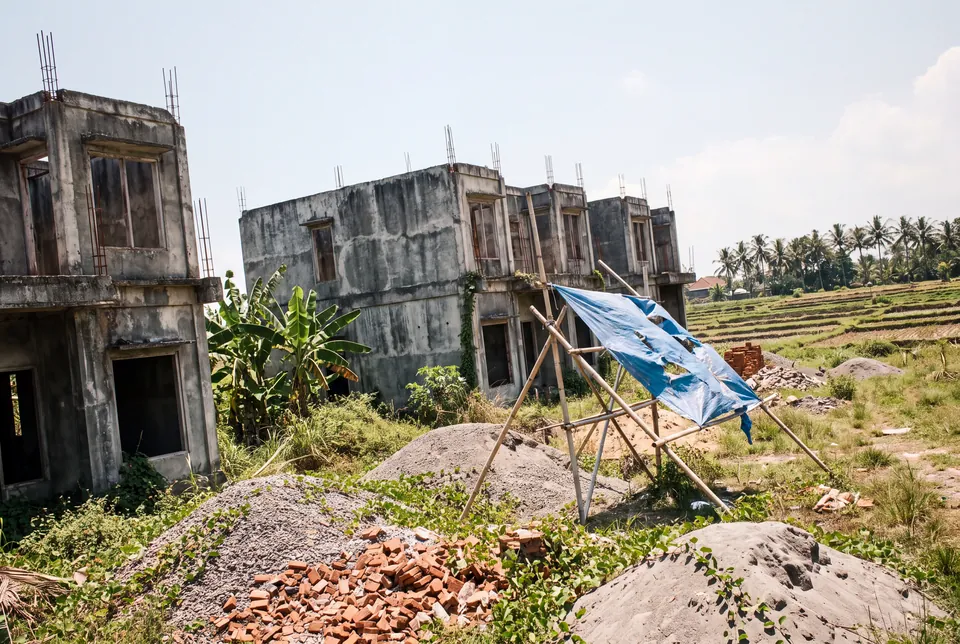
Villa scams and red flags
Bali villa investment scam red flags: nominee deals, rice-field land, unlicensed rentals, 48 demolitions at Bingin. Document checklist. Ask us on WhatsApp.

Co-ownership
Bali restaurant investment by co-ownership: shares in the PT PMA holding lease and licences, 2026 capital rules, no return promises. Ask on WhatsApp.