Before you pay
Bali villa investment scam red flags, with the 2024–2026 enforcement cases.
A Bali villa investment scam rarely looks like fraud. More often it is a real villa sold on a structure that cannot survive inspection: a nominee holding the title, a plot on protected rice field, a rental with no tourism licence, an off-plan unit with no building approval, a “guaranteed” yield, a lease nobody notarised. Since 2024 the authorities have been inspecting. This guide lists the six red flags, the enforcement cases and the document that settles each one.
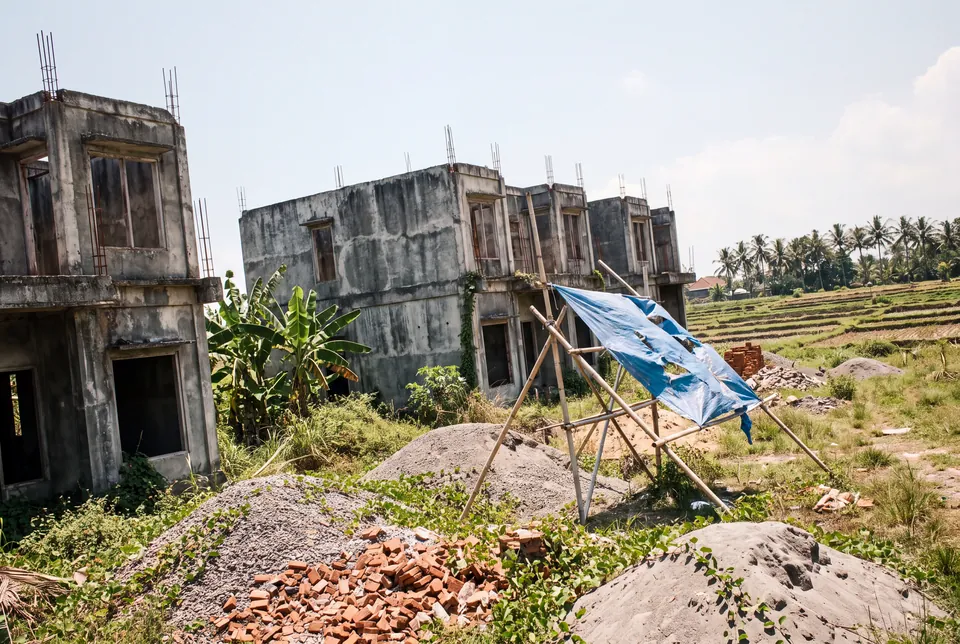
Why a Bali villa investment scam is usually a bad structure, not a fake villa.
Outright theft exists everywhere. What costs most buyers in Bali is quieter: a deal that depended on rules not being enforced, sold by people who may have believed in it themselves. Then enforcement arrived. Emerhub reports that 426 foreign-owned businesses in Bali were investigated in 2025–26 and 423 were sanctioned, out of 19,262 foreign-owned entities registered on the island between 2021 and 2025, roughly 40% of the national total.
That changes how to read an offer. The question is no longer whether the seller seems honest. It is whether every document exists and says what the brochure says. Each red flag below ends with the paper that answers it. None of this is legal advice; take the documents to a notary you appoint yourself.
Red flag 1: a nominee holds the land.
A foreign individual cannot hold freehold land in Indonesia. The old workaround put the title in an Indonesian citizen's name, the nominee, with private agreements behind it. Perda Bali 4/2026, a provincial regulation signed on 24 February 2026, is reported to prohibit nominee land ownership and to add criminal sanctions (RRI). The official text was not available to us, so treat the detail as reported.
Whatever the penalty, the buyer's position was always weak, because the certificate names someone else. Paper to ask for: the land certificate, and a lease or company-held right in your own or your company's name, drawn up by a notary you chose.
Red flag 2: green-zone or rice-field land.
Governor's Instruction 5/2025 forbids converting protected rice fields, classed as LP2B and LSD, to non-agricultural use, tourism property included. After the floods of September 2025 the governor ordered every regency to stop issuing permits for hotels, villas and restaurants on productive farmland; conversion had been running at about 600–700 hectares a year (Detik; ANTARA). Six regencies had already agreed in July 2025 to stop permitting new hotels and restaurants on productive land from 2026 (The Bali Sun). A landowner may still build a private house on such land, but not a commercial building.
A consultancy reports one foreign owner who lost about USD 50,000 of construction on a plot that turned out to be agricultural green belt (Balivisa, December 2025). Nobody had to lie for that to happen. Nobody checked. Paper to ask for: the written zoning confirmation for the exact plot, before the lease is signed.
Red flags 3 and 4: no tourism licence, no building approval.
The unlicensed rental. Short-term rentals had until 31 March 2026 to prove a full licence set, and about 1,600 properties were then slated for removal from booking platforms from August (Horwath HTL; Bisnis.com). A foreign individual cannot hold the tourism operating licence directly, so “you can list it yourself” is not an answer. Paper to ask for: the licence, the company that holds it and its registration in the OSS licensing system.
Off-plan with no approval. A building needs a building approval (PBG, which replaced the old IMB) before construction and a certificate of building worthiness (SLF) before use, with zoning confirmed first, as licensing consultants describe the process. A developer selling units before the PBG exists is asking you to carry the risk that it never will. Paper to ask for: the PBG for the project, not an assurance that it is “in process”.
Red flags 5 and 6: a guaranteed yield and a lease that is not notarised.
The guaranteed yield. No audited series of villa returns exists. Agency commentary puts average villas at 45–60% occupancy in the shoulder seasons with discounts of 10–30% (Kibarer, February 2026), and hotels in Canggu and Tabanan ran at 60% in 2025 (Horwath HTL). A fixed return promised against that background is a promise by one company. Ask which entity signs it and what stands behind it, then rebuild the ROI sheet yourself.
The informal lease. Villa leases of 25–30 years are described as typical, and Horwath HTL notes renewal provisions that are “subject to agreement”. Agents say an extension means a fresh deed at whatever the land is worth by then. A lease that is not a notarial deed, or an option to extend with no price mechanism, gives you little to stand on. Paper to ask for: the notarised deed, read by your own notary. See how leasehold works for foreigners.
Enforcement cases, 2024–2026: what was closed and why.
| Case | When | What happened | Source |
|---|---|---|---|
| Parq complex, Ubud | Sealed 11 November 2024, closed 20 January 2025 | Built partly on protected rice fields. The director was named a suspect on 24 January 2025. | Bali Discovery |
| Bingin Beach, Uluwatu | From 21 July 2025 | 48 structures demolished: warungs, restaurants and villas built without permits on state land. | The Bali Sun |
| Jatiluwih, Tabanan | 2 December 2025 | 13 buildings sealed, restaurants among them, for breaching protected-farmland rules in the UNESCO rice terraces. | Detik |
| A Seminyak restaurant and a padel venue in Munggu | Undated report | A provincial parliament commission demanded closure over permits. | bali.live |
| Foreign-owned companies, island-wide | 2025–26 | 426 investigated, 423 sanctioned. | Emerhub, 18 May 2026 |
| Short-term rentals | From August 2026 | About 1,600 properties slated for removal from booking platforms. | Bisnis.com, 3 June 2026 |
Sources as listed, checked on 12 November 2026. Villas, restaurants and leisure venues appear side by side: enforcement follows the land and the permit, not the type of business.
Verification checklist: eight documents before any payment.
- Land certificate, with the owner's identity checked by your notary.
- Written zoning confirmation for the plot: not protected rice field, and zoned for the use you intend.
- Lease or land-right deed in your name or your company's, notarised, stating the years, the extension terms and the right to build or sublet.
- Building approval (PBG) for the structure, and the worthiness certificate (SLF) if it is finished.
- The operating licence for short-term rental and the company that holds it.
- Company documents if a PT PMA is involved: deed, business code, shareholders.
- Twelve months of real booking or sales statements, if income is promised.
- The guarantee, if there is one: which entity signs, for what term, with what security.
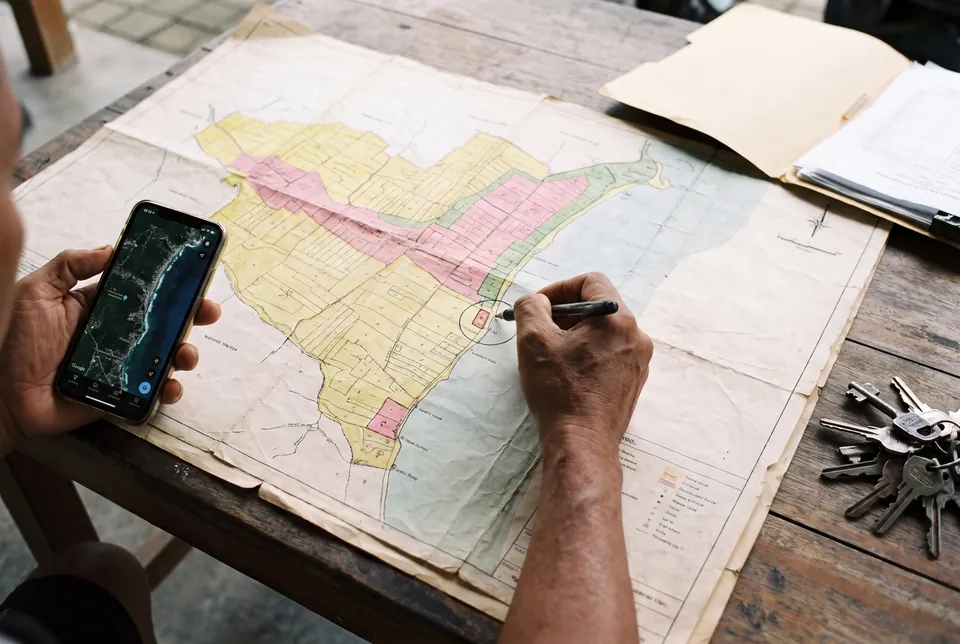
The same checks apply to a restaurant.
We build and co-own restaurants, and it would be convenient to call this list a villa problem. It is not. Bingin lost restaurants and warungs along with villas. Jatiluwih sealed restaurants. The farmland orders name restaurants in the same sentence as hotels and villas. A restaurant on the wrong plot is no better protected than a villa.
The yield red flag applies too. Marketplace listings for Bali food businesses show self-reported EBITDA margins of 10–40% (Smergers), which nobody audits. One Uluwatu restaurant on sale reports USD 17,000 of profit on USD 453,000 of turnover. Any restaurant offer that states a guaranteed return deserves the same question as a villa guarantee.
What a correctly set-up restaurant can offer is narrower and checkable. Its land is dry and zoned for tourism or commerce, its building has an approval, its lease is notarised and held by a PT PMA. A restaurant like that carries fewer land and licensing unknowns than a nominee villa or an unlicensed rental. Its risk is operational instead, which is why the operator's record and the reporting matter. Restaurant code KBLI 56101 is open to full foreign ownership (Hukumonline, June 2026); sources disagree on how far the May 2026 registration block reaches, so the code is confirmed in OSS before a lease is signed.
Our own rules follow from the list above. We check zoning before a client signs a lease. We do not use nominee structures. We do not build on protected rice fields. We do not promise returns. Co-ownership means shares in the Indonesian company (PT PMA) that holds the lease and licences, with a shareholders' agreement drafted by a notary; ticket size, reporting and exit terms are set per project and sent as a project sheet on WhatsApp. The building work is done by the Kimo Construction team. More: restaurant co-ownership, what to ask an operator, building on your own leased land and a first budget in the cost calculator. Or send us the location pin on WhatsApp.
Questions we get on WhatsApp
How do I spot a Bali villa investment scam?
Ask for six papers: land certificate, zoning confirmation, notarised lease, building approval, rental licence and the entity behind any guarantee. A sound project produces them; a weak one produces reasons. The wider case for and against is in is buying property in Bali a good investment.
What is a “nominee Bali” structure, and is it still legal?
It puts land in an Indonesian citizen's name on a foreigner's behalf. Perda Bali 4/2026 is reported to prohibit it, with criminal sanctions. The official text was not available to us; confirm with a notary. The lawful routes, a lease or a company-held land right, are set out in can foreigners buy property in Bali.
Are Bali property scam stories on Reddit reliable?
They are useful for learning which questions to ask and unreliable as evidence about a specific villa. If you are investing in a Bali villa, Reddit cannot check a zoning class or a licence. Documents can, and the deposit checklist lists them.
What is green-zone land in Bali?
Sellers use the term loosely for agricultural land, above all the protected rice fields covered by Governor's Instruction 5/2025. A landowner may still build a private house there, but not a rental villa or a restaurant. The risk is highest on the rice-field edge, as our Pererenan and Seseh page explains.
Can a developer guarantee rental returns on a Bali villa?
A developer can sign a guarantee, and it is worth what the signing company can pay. No audited data supports a fixed yield. Our ROI guide shows which lines to test.
Do restaurants in Bali carry the same risks as villas?
The land and permit risks are the same, and restaurants were closed at Bingin and Jatiluwih. A restaurant adds operating risk and, when correctly licensed, avoids the rental-licence problem. Asset types are set side by side in how to invest in Bali.
Read next
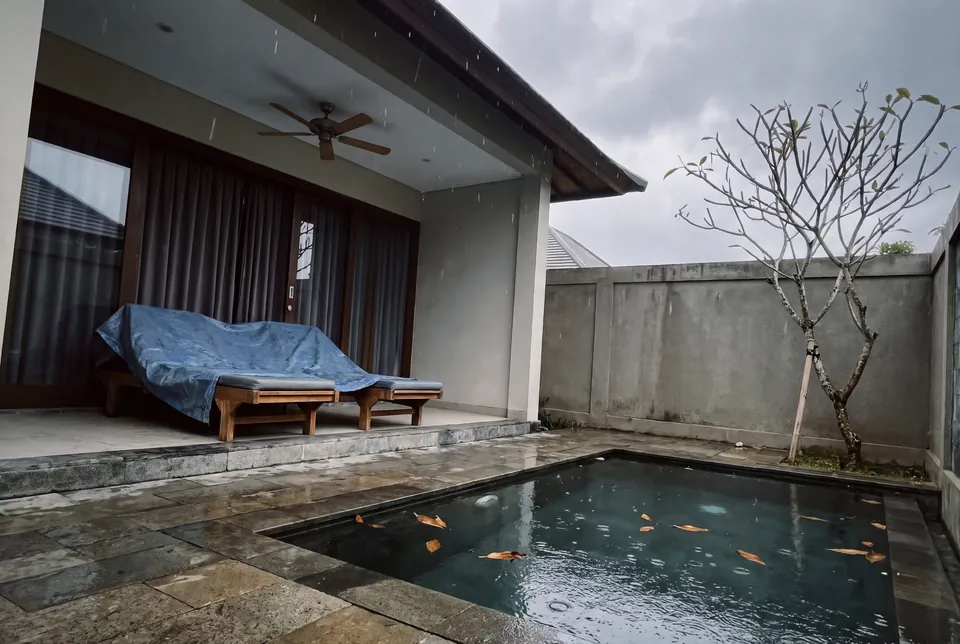
Buying a villa in 2026
Is it worth buying a villa in Bali in 2026? The 31 March licence deadline, company capital rule, occupancy data and a deposit checklist. Ask on WhatsApp.
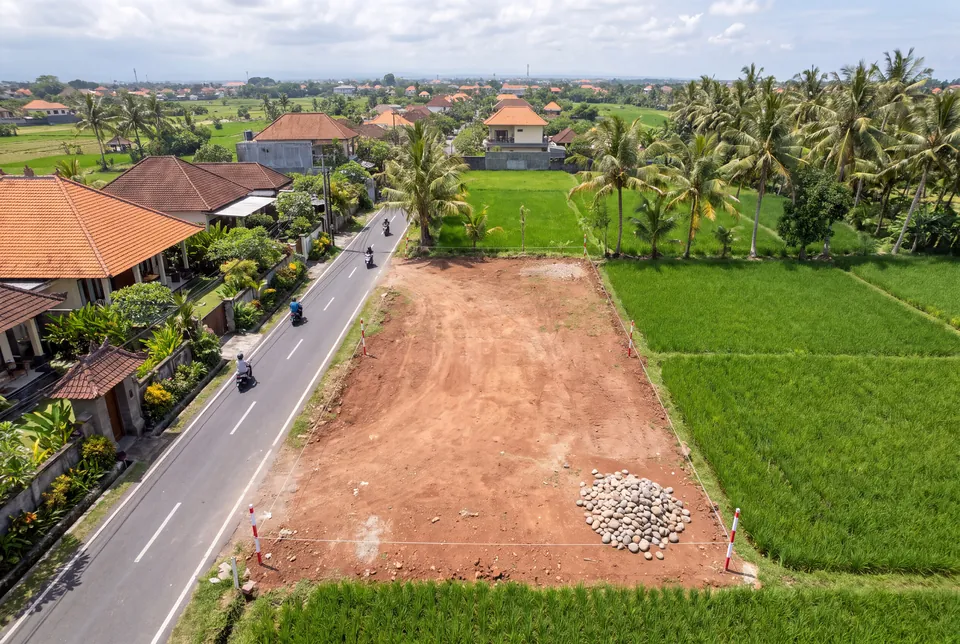
Foreign property ownership
Can foreigners buy property in Bali? Leasehold of 25–35 years, HGB through a PT PMA, commercial leases of 5–10 years and the zoning check. Ask on WhatsApp.
Co-ownership
Bali restaurant investment by co-ownership: shares in the PT PMA holding lease and licences, 2026 capital rules, no return promises. Ask on WhatsApp.