Villa or restaurant share
Is buying property in Bali a good investment: the 2026 evidence on both sides.
Is buying property in Bali a good investment in 2026: for a licensed, well-located property on a long lease it still can be, and for an unlicensed rental villa bought on a brochure yield it has become much harder. Arrivals hit a record 6.95 million foreign visitors in 2025 and hotels ran at 74% occupancy (Horwath HTL, March 2026). The squeeze is in licences, supply and land rules. This guide gives both sides with sources, then one alternative we build: a share in a restaurant.
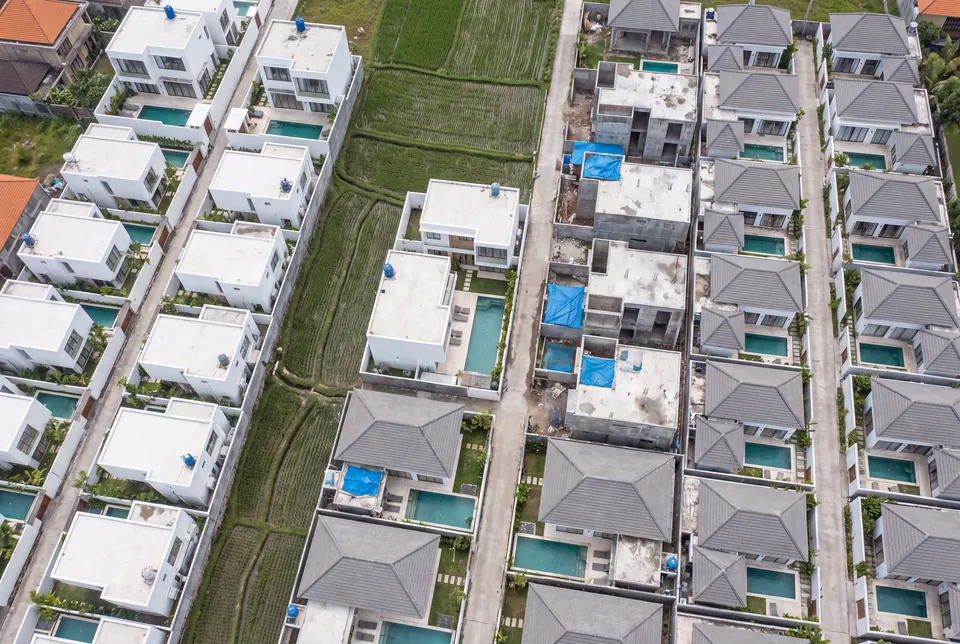
Is buying property in Bali a good investment: the short answer for 2026.
It depends on three things you can check before you pay: the licence the property will trade under, the land it stands on, and the years left on the lease. Get one wrong and no occupancy forecast will rescue it.
Demand has rarely looked stronger. Bali received 6.95 million foreign visitors in 2025, a record and about 10% above the 6.33 million of 2024 (BPS Bali via Horwath HTL, March 2026). The rules have rarely looked tougher. Short-term rental villas had to prove full licensing by 31 March 2026, a foreign individual cannot hold that licence in a personal name, and the province has moved against nominee land deals.
So the answer has two halves. Hotels and properly licensed villas in strong locations still fill. The unlicensed villa on a crowded street, bought on a brochure yield, is the product that lost its footing.
What still works: record arrivals and hotels that fill.
Horwath HTL's March 2026 report, built on Bali Hotels Association data, puts island-wide hotel occupancy at 74% for 2025 (down 2.3% on 2024) at an average daily rate of IDR 2.35 million, about USD 150. BPS, the national statistics agency, counts all star-rated hotels and reports a lower 61.02%, still the highest of any Indonesian province.
Who comes matters as much as how many. Australia alone sent 1.63 million visitors in 2025 (Horwath HTL). BPS Bali puts foreign-visitor spending at about IDR 2.11 million (about USD 128) per night, up from IDR 2.05 million a year earlier, with accommodation first and food and drink second.
Two qualifiers. The 2024 proposal for a two-year freeze on new hotels, villas and clubs in South Bali was dropped in January 2025 (Skift), so no blanket ban on tourism property exists. And the domestic market softened: Horwath counts 9.6 million domestic arrivals in 2025 against 10.1 million in 2024.
Hotel occupancy by area in 2025.
| Area | Hotel occupancy, 2025 | Average stay |
|---|---|---|
| Nusa Dua | 79.2% | 3.1 days |
| Seminyak | 74.9% | 3.2 days |
| Sanur | 69.9% | not listed |
| Ubud | 68.6% | 2.5 days |
| Jimbaran and Uluwatu | 66.0% | not listed |
| Canggu and Tabanan | 60.0%, down 19.5% on a new hotel sample | 2.4 days |
| All Bali | 74% | not listed |
Source: Horwath HTL / C9 Hotelworks, “Bali Hotel & Branded Residences 2026”, March 2026, pp. 3–8, using Bali Hotels Association data. Hotels only: no audited villa series exists in the sources we could verify.
What got harder in 2026: licences, delisting and supply.
The first change is licensing. Short-term rentals had to show a full licence set by 31 March 2026 or come off the booking platforms, and about 1,600 properties were slated for removal from August 2026 (Horwath HTL; Bisnis.com, 3 June 2026). Horwath also states that foreign individuals cannot directly hold the tourism operating licence a short-term rental needs. The legal route is a foreign-owned company (PT PMA) with a committed investment plan above IDR 10 billion (about USD 606,000).
The second is company registration. Since May 2026 the national licensing system (OSS) has rejected new foreign-owned companies in Bali for low-risk and medium-low-risk business codes, as Emerhub reported on 18 May 2026. Real-estate code 68111 is on the closed list; Bali alone held 72.1% of Indonesian projects under it. Perda Bali 4/2026, a provincial regulation signed in February 2026, is reported to prohibit nominee land ownership with criminal penalties; confirm its reach with a notary.
The third is supply. Horwath counts more than 70 hospitality-managed residential projects on sale, about 40% of them in Canggu and Berawa, and the villa share of that stock rose from 13% to 18% in a year. Bank Indonesia's Bali office recorded commercial property demand down 4.80% year on year in the last quarter of 2025, and hotel demand down 6.71% (Bali Discovery, February 2026).
Bali property investment yields: what the sources can and cannot show.
No audited, island-wide series of villa yields exists in any source we could verify. What circulates are agency views. Kibarer wrote in February 2026 that average villas struggle to hold 45–60% occupancy in the shoulder seasons and that owners discount by 10–30%. Villa Finder is reported to project occupancy falling from 66% to 56% in 2026. Neither publishes a method, so read both as opinions from interested parties.
Ask whether the yield on a sales sheet is gross. A leasehold property loses one year of its term every year, and the manager, the booking platform and the maintenance crew are paid before you are. We rebuild that sheet in Bali villa ROI: the maths after fees, vacancy and lease decay.
Is buying a villa in Bali a good investment: the case on each side.
Evidence for
- Record demand: 6.95 million foreign visitors in 2025 (BPS Bali via Horwath HTL).
- Hotels still fill: 74% across the island, 79.2% in Nusa Dua, 74.9% in Seminyak.
- Leases in hospitality-managed developments typically run 25 to 35 years (Horwath HTL), long enough to plan around.
- The proposed two-year building freeze for South Bali was dropped in January 2025.
Evidence against
- A foreign individual cannot hold the short-term rental licence directly; the company route needs a plan above IDR 10 billion.
- About 1,600 properties were slated to lose their platform listings from August 2026, and C9 Hotelworks expects more resales of unlicensed villas.
- Canggu and Tabanan hotels ran at 60%, and about 40% of managed projects on sale are in Canggu and Berawa.
- A lease has an end date. Agents describe an extension as a new deed at the land value of that day; confirm the wording with a notary.
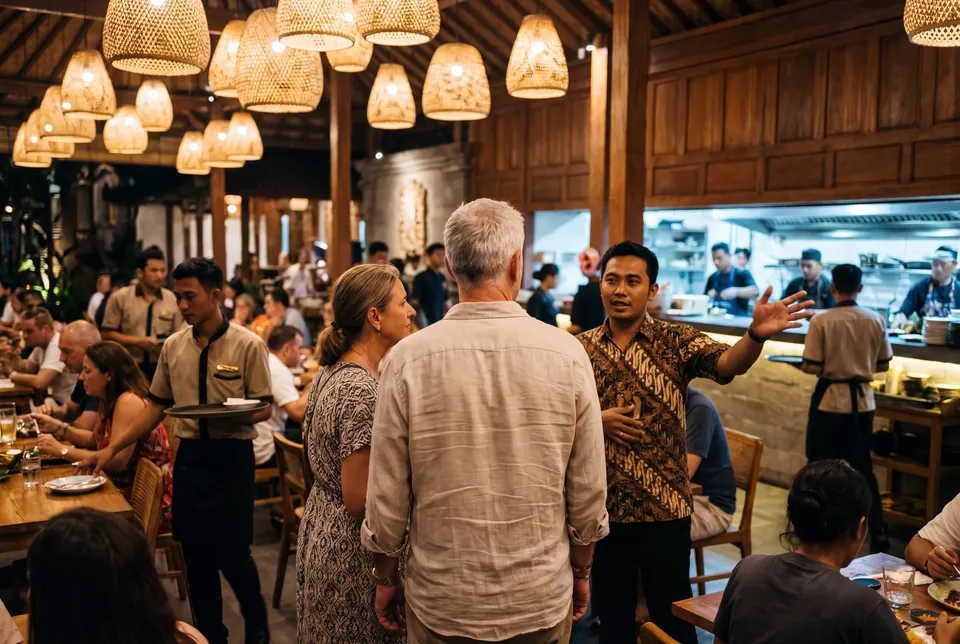
A restaurant share: a different risk, not a smaller one.
We build and open restaurants, so read this part knowing where we stand. Food and drink is the second-largest item in a foreign visitor's Bali budget after the room (BPS Bali); nationally it takes 18.5% of foreign-tourist spending (BPS, 2025).
The claim we are prepared to defend is narrow. A restaurant on tourism- or commercial-zoned dry land, built with a building approval and held through a PT PMA with a notarised lease, has fewer land and licensing unknowns than a villa bought through a nominee or rented out without a tourism licence. Restaurant business code KBLI 56101 is open to 100% foreign ownership and sits in the medium-high risk tier (Hukumonline, June 2026), while the May 2026 block is reported to stop at the medium-low tier. Some consultants read the block more widely, so the exact code is confirmed in OSS before any lease is signed.
What a restaurant adds is operating risk. Bali had 64,521 restaurants and eateries in 2024 (BPS via GoodStats). Published net-margin benchmarks for Indonesia run from 5–12% for casual dining to 10–20% for fine dining (Klikit, 2026), and they come from interested parties. One Uluwatu restaurant listed for sale shows USD 453,000 of yearly turnover and USD 17,000 of profit. And the productive-land ban names restaurants next to villas: 13 buildings, restaurants among them, were sealed at Jatiluwih in December 2025.
So the operator's track record and the monthly reporting matter more than the building. Our co-ownership offer is shares in the Indonesian company (PT PMA) that holds the lease and licences, with a shareholders' agreement drafted by a notary; ticket size, reporting and exit terms are set per project and sent as a project sheet on WhatsApp. We state no expected return. Read how a restaurant share works and what to ask any operator before you co-own, or ask for the current project sheet.
Rental villa and restaurant share, side by side.
| Rental villa | Restaurant share | |
|---|---|---|
| What you hold | A lease on land and a building | Shares in the PT PMA that holds the lease and licences |
| Licence route for a foreigner | Tourism licence through a PT PMA; closed to foreign individuals (Horwath HTL) | PT PMA under KBLI 56101; 100% foreign ownership allowed (Hukumonline) |
| Capital rule | Investment plan above IDR 10 billion | Same plan, counted once per regency for food and drink (BKPM Regulation 5/2025) |
| Typical lease | 25–35 years in managed developments (Horwath HTL) | Often 5 or 10 years prepaid (reported by Emerhub) |
| Main risk | Licence, land status, lease running down, crowded supply | Operations: thin margins, staffing, 64,521 competing venues |
| Shared risk | Protected farmland | Protected farmland |
Sources: Horwath HTL / C9 Hotelworks, March 2026; Hukumonline, 25 June 2026; BKPM Regulation 5/2025; Emerhub, 2026; BPS via GoodStats, January 2026. This compares types of risk, not returns.
Four checks before a deposit on any Bali property.
- 01
Get the zoning status in writing
Ask for the spatial-plan confirmation for the plot and make sure it is not protected rice field.
- 02
Name the licence holder
Ask which company will hold the operating licence and under which business code. If the answer is a local nominee, stop.
- 03
Count the lease years
Divide the price by the years left. That is the yearly cost of the lease running down, before any income. How leasehold and company-held land work.
- 04
Price one alternative
Run the same budget through the restaurant cost calculator. An 80-seat new build comes to IDR 3.5–4.7 billion (about USD 213,000–286,000), an indicative range for 2026; a fixed price follows drawings and a bill of quantities.
Questions we get on WhatsApp
Is buying a villa in Bali a good investment in 2026?
It can be when the villa is licensed for short-term rental through a company, stands on correctly zoned land and has a long lease. An unlicensed villa risks losing its platform listings under the rules that applied from 31 March 2026. The buyer's checklist is in is it worth buying a villa in Bali.
What are realistic Bali property investment yields?
No audited island-wide figure exists. Agencies report shoulder-season occupancy of 45–60% for average villas (Kibarer, February 2026) without a published method, while hotels averaged 74% in 2025 (Horwath HTL). Work from occupancy, fees and lease years, as in our villa ROI guide.
Is it worth investing in Bali at all?
Visitor demand is at a record and hotels still fill, so the market is there. What changed is that the rules now reward licensed, correctly zoned projects and punish shortcuts. How to invest in Bali compares six asset types.
Is a restaurant share safer than a villa?
Not safer overall. On correctly zoned dry land, held through a PT PMA with a notarised lease, it has fewer land and licence unknowns than an unlicensed or nominee-held villa, and more operating risk. The co-ownership page lists those risks plainly.
Where is Bali property investment strongest by area?
Hotel occupancy in 2025 ranged from 79.2% in Nusa Dua to 60% in Canggu and Tabanan (Horwath HTL). The area pages cover seven districts from the restaurant side.
Read next
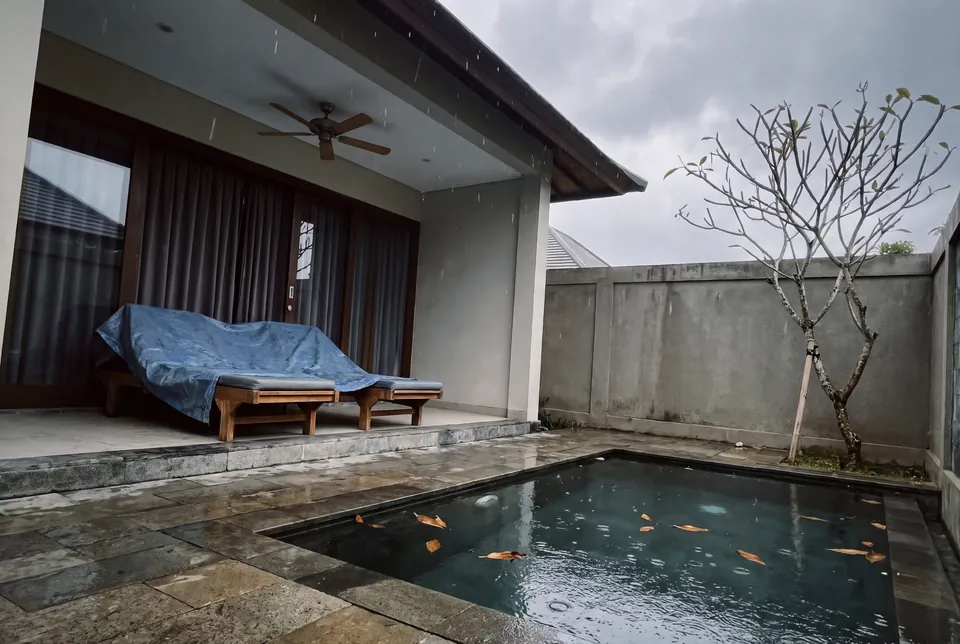
Buying a villa in 2026
Is it worth buying a villa in Bali in 2026? The 31 March licence deadline, company capital rule, occupancy data and a deposit checklist. Ask on WhatsApp.

Villa ROI, line by line
Bali villa ROI rebuilt line by line: 74% and 60% occupancy cases, fees, upkeep and lease decay on a 25-year lease, sources named. Questions on WhatsApp.
Co-ownership
Bali restaurant investment by co-ownership: shares in the PT PMA holding lease and licences, 2026 capital rules, no return promises. Ask on WhatsApp.